A majestic visitor in the Bay of La Paz
The whale shark (Rhincodon typus) is one of the main natural attractions of the La Paz region in Baja California Sur.
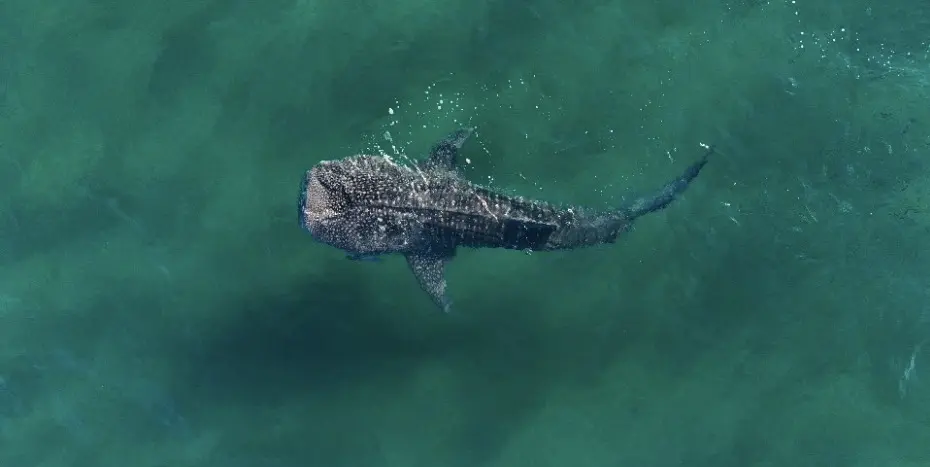
In La Paz Bay, there is a sandbar called El Mogote , where, thanks to the currents and oceanographic conditions, a significant number of whale sharks congregate to feed.
This phenomenon occurs between October and April , a time when visitors have the opportunity to observe these impressive animals in their natural habitat.
The whale sharks that congregate at El Mogote are mainly juveniles , measuring less than 9 meters, while the adults tend to stay further offshore.
Characteristics and curiosities of the whale shark
Its unique appearance
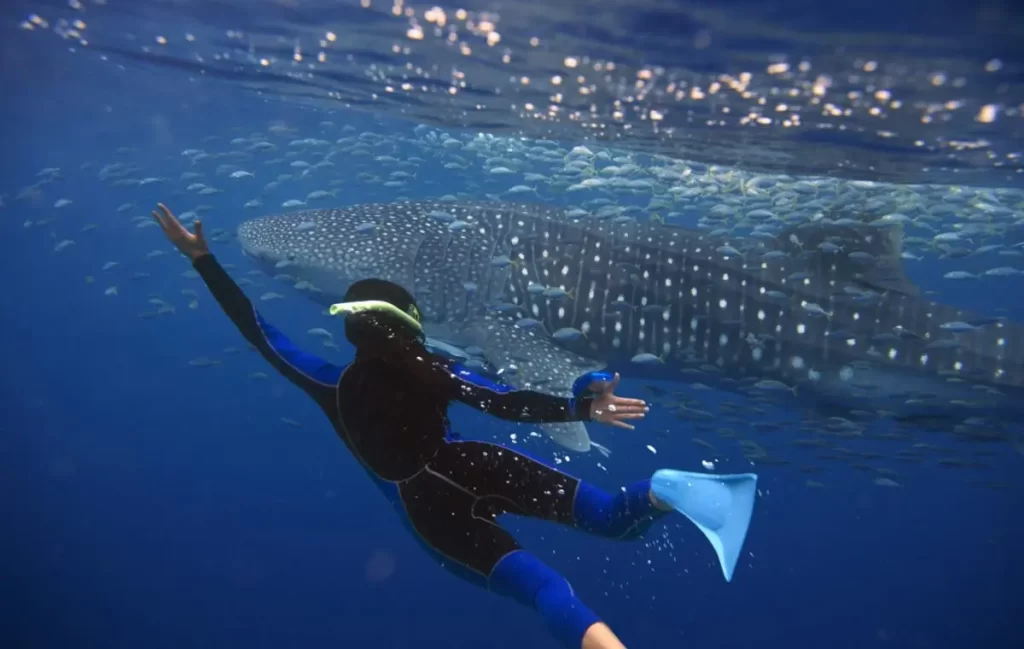
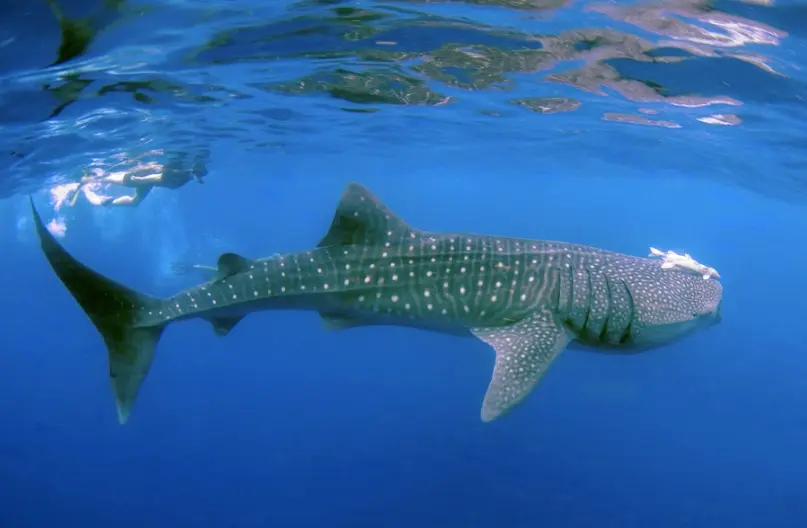
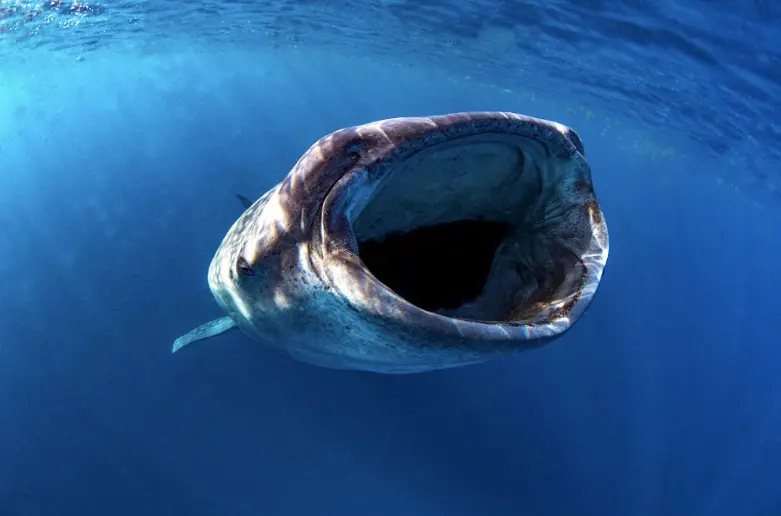
The whale shark is easily recognizable by its large size, wide, flattened head , and filter-feeding mouth capable of taking in enormous quantities of water to feed on plankton.
Its body is decorated with a beautiful pattern of white spots and lines , like a starry sky under the sea, which easily distinguishes it from any other species.
Shark or whale?
Because of its name, many people wonder if the whale shark is a shark (fish) or a whale (mammal).
The answer is clear: it is a shark , and in fact, the largest fish in the world .
It can reach lengths of up to 12 meters , and there have even been reported sightings of specimens exceeding 20 meters .
Unlike whales and dolphins, it breathes through gills , not lungs. Its diet consists mainly of plankton and small organisms , making it completely harmless to humans.
A mystery yet to be discovered: its reproduction
The whale shark’s reproductive cycle remains one of the ocean’s great mysteries .
To this day, no one has directly observed its reproductive process, so information is based solely on anatomical studies and isolated findings.
We know that females give birth to live young , but the embryos develop inside eggs within the mother’s body.
This type of reproduction is known as ovoviviparity .
Swimming with whale sharks: an unforgettable experience
Is it dangerous?
Despite its colossal size, the whale shark is a gentle and peaceful animal .
It has a very small brain and spends most of its time feeding peacefully .
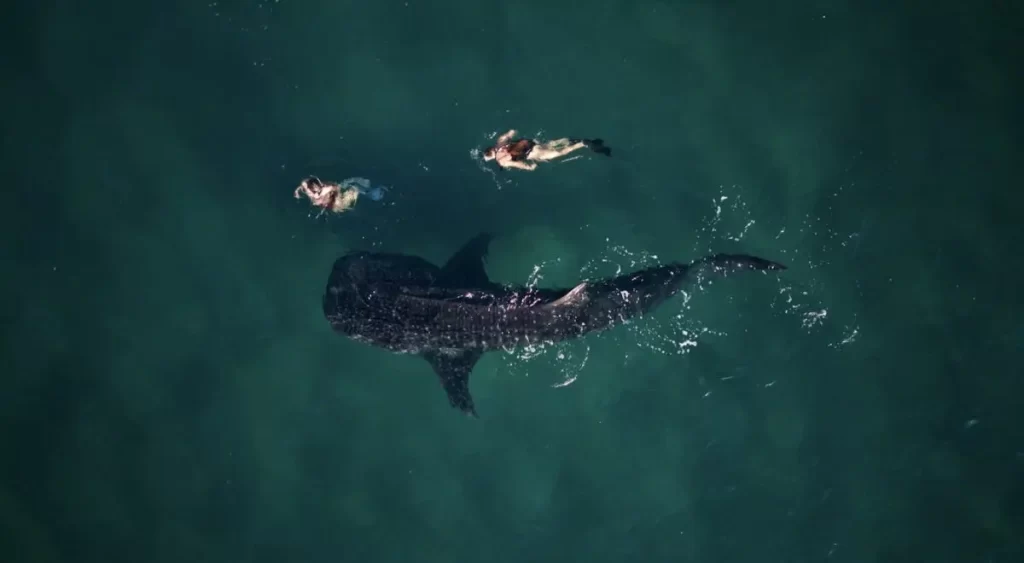
Therefore, swimming alongside them is not dangerous , provided that basic rules of responsible interaction are respected.
Recommendations for a safe and ethical experience
- Always maintain a safe distance from the animal.
- Don’t touch him or get in his way .
- Avoid using sunscreens or chemicals that may affect the water.
- Remember that its skin is rough and can cause scratches if you come into direct contact with it.
- Do not interfere with your skin’s natural biome , a unique ecosystem that is home to unique microorganisms.
Conservation and protection of the species
The whale shark is listed as a threatened species , primarily due to bycatch and boat traffic in its feeding grounds.
Therefore, it is protected both nationally and internationally .
Thanks to conservation efforts and responsible tourism, it is now possible to observe and swim with them safely, under strict regulations that guarantee their well-being.
Participating in these activities not only offers an extraordinary experience but also promotes environmental education and ocean protection .
Live the experience with respect and admiration
Swimming with whale sharks is one of the most exciting and memorable experiences you can have in La Paz.
At MTA (Mexico Travel Adventure), we guide you to enjoy this encounter in a responsible, educational, and environmentally friendly way .
Come and meet this gentle giant and discover why the Sea of Cortez is considered one of the richest and most fascinating ecosystems on the planet!