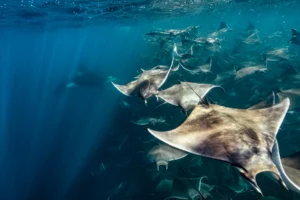

Imagine floating quietly in the deep, offshore waters of the Sea of Cortez, looking down into the endless blue abyss. Suddenly, a distinct black-and-white torpedo shape materializes below your fins. That heart-stopping, visceral thrill is exactly what draws adventurous travelers to Baja California Sur, making swimming with orcas the absolute pinnacle of marine encounters. We are talking about entering the raw, untamed waters of the Eastern Pacific to share space with a six-ton apex predator.
However, jumping into the ocean with a pod of killer whales is nothing like buying a ticket to a controlled marine park. Instead, this is a true, highly unpredictable ocean safari. Out here, nature runs entirely on its own schedule. Tracking down these nomadic hunters requires extreme patience, a deep understanding of marine currents, and a highly experienced crew.
Consequently, finding these highly mobile animals demands captains who spend thousands of hours on the water reading the subtle signs of the sea. Because these expeditions require elite navigation and local knowledge, joining a specialized Orca and Mobula Ray Expedition ensures you have the absolute best team leading your adventure.
The Biology of the ETP Orca
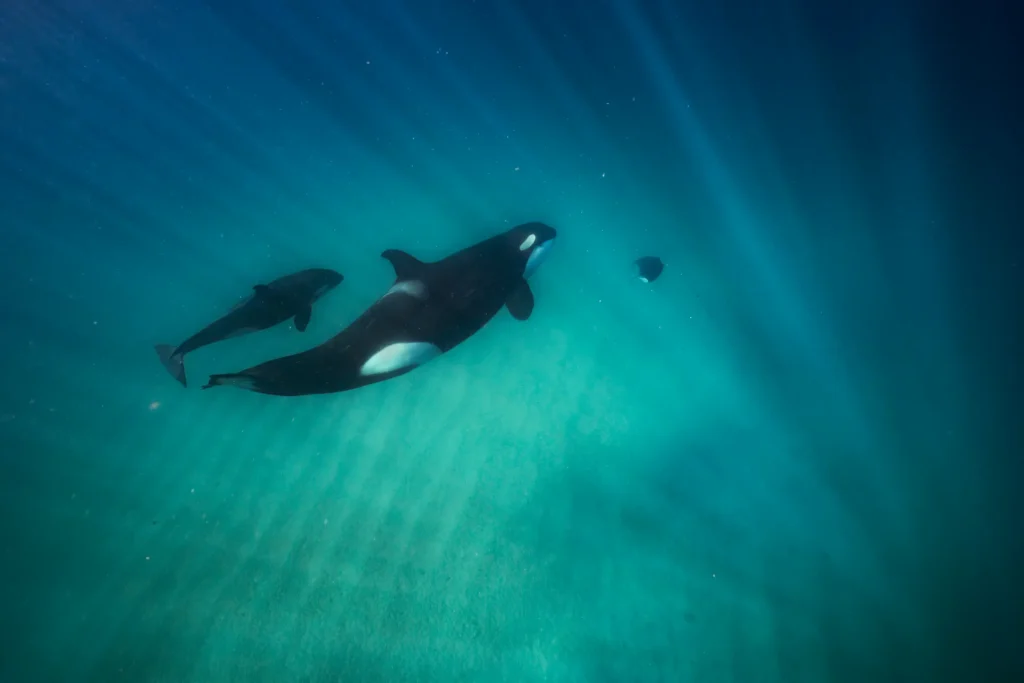
To truly appreciate this experience, you must understand exactly what you are looking for. The killer whales that patrol the Sea of Cortez belong to a specific ecotype known as Eastern Tropical Pacific (ETP) orcas. Unlike the famous “resident” pods of the Pacific Northwest that feed primarily on salmon, ETP orcas are true transients. They are highly nomadic, roaming across thousands of miles of open ocean from the coastline of Southern California all the way down to Central America.
Furthermore, these majestic animals look slightly different from their cold-water cousins. ETP orcas typically feature a darker, less pronounced “saddle patch” behind their dorsal fin, and they possess an incredibly sleek, hydrodynamic build designed for high-speed pursuits. They travel in tight-knit, fiercely loyal family pods led by a matriarch, utilizing complex vocalizations to communicate across vast underwater distances.
So, why do they venture deep into the Sea of Cortez? Ultimately, they follow the food. The Gulf of California is a nutrient-dense superhighway, and during specific times of the year, it hosts massive aggregations of their absolute favorite prey: schooling mobula rays.
The Open-Ocean Hunting Strategy

Witnessing an ETP orca pod hunting in the open ocean is a breathtaking display of tactical brilliance. When a pod locates a massive fever of mobula rays, they do not just charge in blindly. Instead, they execute a highly coordinated, strategic assault. The whales work together seamlessly to corral the rays, driving them toward the surface where the prey has nowhere left to hide.
Subsequently, the real action begins. The orcas utilize astonishing bursts of speed to intercept the agile rays. Because mobula rays are incredibly fast and can literally launch themselves out of the water to escape, the orcas employ a devastating weapon: their flukes. A hunting orca will often execute a high-speed underwater turn, unleashing a powerful “karate chop” with its tail to physically stun the fleeing ray.
Meanwhile, the water boils with action as the family shares the catch, teaching younger calves the exact techniques required to survive in the wild. Watching this intricate, brutal, and beautiful dance unfold right in front of your mask is a profound reminder of the ocean’s raw power.
The Reality of the Encounter: Timing is Everything
Despite the high-octane nature of their hunts, you must manage your expectations before stepping onto the boat. Finding a pod across hundreds of square miles of open water is a monumental task. Sometimes, you might spend eight hours scanning an empty horizon without a single dorsal fin in sight. Other days, the ocean erupts with life within the first hour of leaving the marina.
Therefore, embracing the waiting game is a mandatory part of the journey. When the magic moment finally happens, the conditions must be perfect to allow a safe water entry. You are entirely at the mercy of the wind, the swell, and the mood of the animals.
Every year, the probability of spotting orcas fluctuates based on oceanic conditions. For example, during May and June of 2025, our crews encountered orcas on approximately 45% of our expeditions. However, 2026 brought unusually warm waters, dropping that sighting rate to around 15%. Historically, July and August also yield high encounter rates, mirroring the peaks of May and June. During the rest of the year, sightings average about once every couple of weeks.
The Ethical Approach: Why Rules Matter
Having a memorable day on the water is only half the equation. The other half depends entirely on your choice to support ethical wildlife tours. Unfortunately, the rise in marine tourism has led to a surge of irresponsible operators who treat the ocean like an amusement park. These “cattle boats” often chase down pods at high speeds, aggressively cutting off the animals’ path just to secure a quick photo for their clients.
Conversely, chasing wild orcas carries devastating biological consequences. When boats aggressively pursue a pod, they often separate young, vulnerable calves from their mothers. Moreover, forcing an apex predator to flee at top speed forces them to burn massive amounts of essential caloric energy. For a wild animal, wasted calories can literally mean the difference between life and death during lean hunting seasons.
Following the strict guidelines set by SEMARNAT ensures we never disrupt the natural hunting patterns of these incredible creatures.
Consequently, sustainable Baja California Sur orca encounters prioritize the well-being and space of the animals above all human desires. We let the whales dictate the interaction; if they want to approach the boat, they will.
Official Protocols: How We Enter the Water
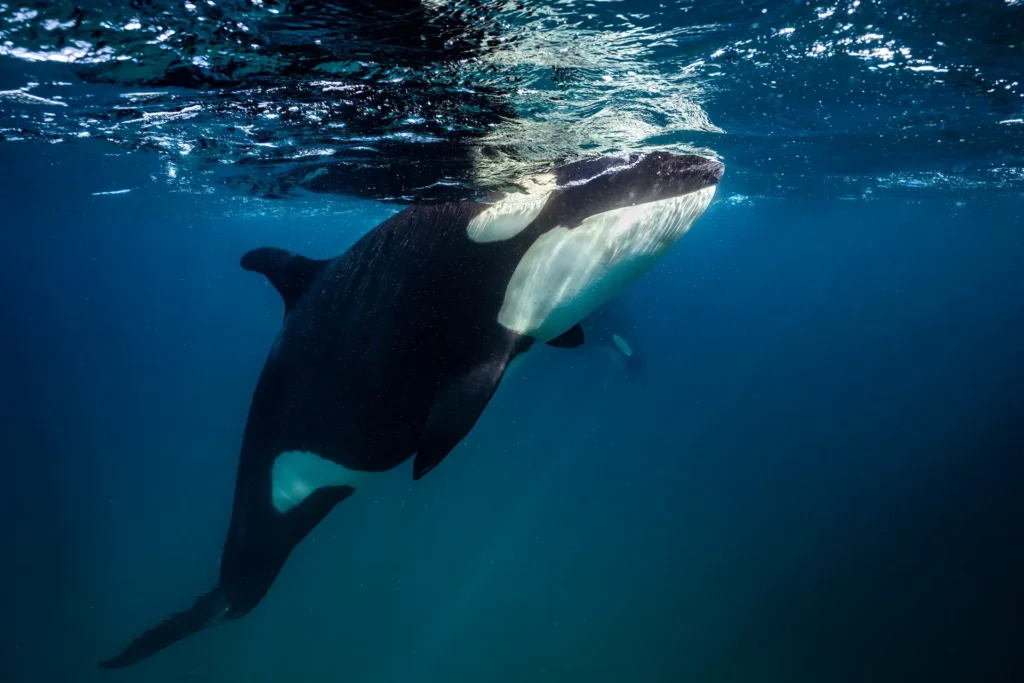
While the 2025-2026 management plan is currently under review, our MTA protocols strictly adhere to the core federal safety guidelines. When the captain gives the signal, a maximum of four swimmers and one certified guide are allowed in the water per boat.
You must wear a full wetsuit or life jacket, and maintain a strict minimum distance of 20 meters (65 feet) from the orcas at all times. Under no circumstances is physical contact permitted.
Furthermore, the encounter happens strictly on the surface. Freediving (apnea), motorized propulsion devices (like subwings or sliders), and swimming directly under the animals are expressly forbidden. Our group must stay tight on the surface and observe passively, ensuring we never obstruct their path or use disruptive gear like artificial lighting, flash photography, or selfie sticks. We only enter the water when the orcas are engaged in social or feeding behaviors; swimming during their resting or traveling periods is prohibited to ensure their conservation.
Furthermore, when you choose an operator that values conservation, you actively help protect the delicate balance of Sea of Cortez marine life.
If you want to plan your trip the right way, booking a dedicated Orca and Mobula Ray Expedition puts you in the water with professionals who prioritize fierce ocean stewardship.
When you are leaning over the gunwale of a panga waiting for a dorsal fin to break the surface, choosing a crew that deeply respects marine wildlife changes everything. Discover our ethical expeditions and join the adventure today.
Preparation and Gear: Ready for the Blue Water
Before you can experience this magic, you must prepare yourself physically and logistically. You will be spending long days on a fast-moving panga exposed to the elements. Therefore, a high-quality wetsuit is absolutely mandatory. Even when the Mexican sun is blazing, the offshore water temperatures can drop significantly. A proper wetsuit provides essential core warmth, crucial extra buoyancy, and protection against passing jellyfish.
Additionally, you need the right clothing for the surface intervals. Once you climb back onto the boat dripping wet, the ocean breeze creates immediate wind chill. Packing high-quality, quick-dry layers and a heavy windbreaker keeps you comfortable while you scan the horizon for the next encounter.
Finally, do not underestimate the marine environment. You must possess strong, confident snorkeling skills. You are not floating in a calm, shallow bay; you are dropping into deep, open-ocean blue water with active swells and shifting currents. Being comfortable clearing your mask, finning efficiently against a current, and maintaining spatial awareness in deep water ensures you can focus entirely on the whales rather than struggling with your gear.
The Privilege of the Wild
Ultimately, sharing the water with a highly intelligent apex predator is a humbling, life-altering privilege. We are simply guests stepping briefly into their massive, underwater territory. When we respect their boundaries, maintain our distance, and let them initiate the interaction, these magnificent animals sometimes choose to share a fleeting, magical moment with us. Book smart, train your open-water skills, and prepare yourself for the most spectacular marine adventure on the planet.