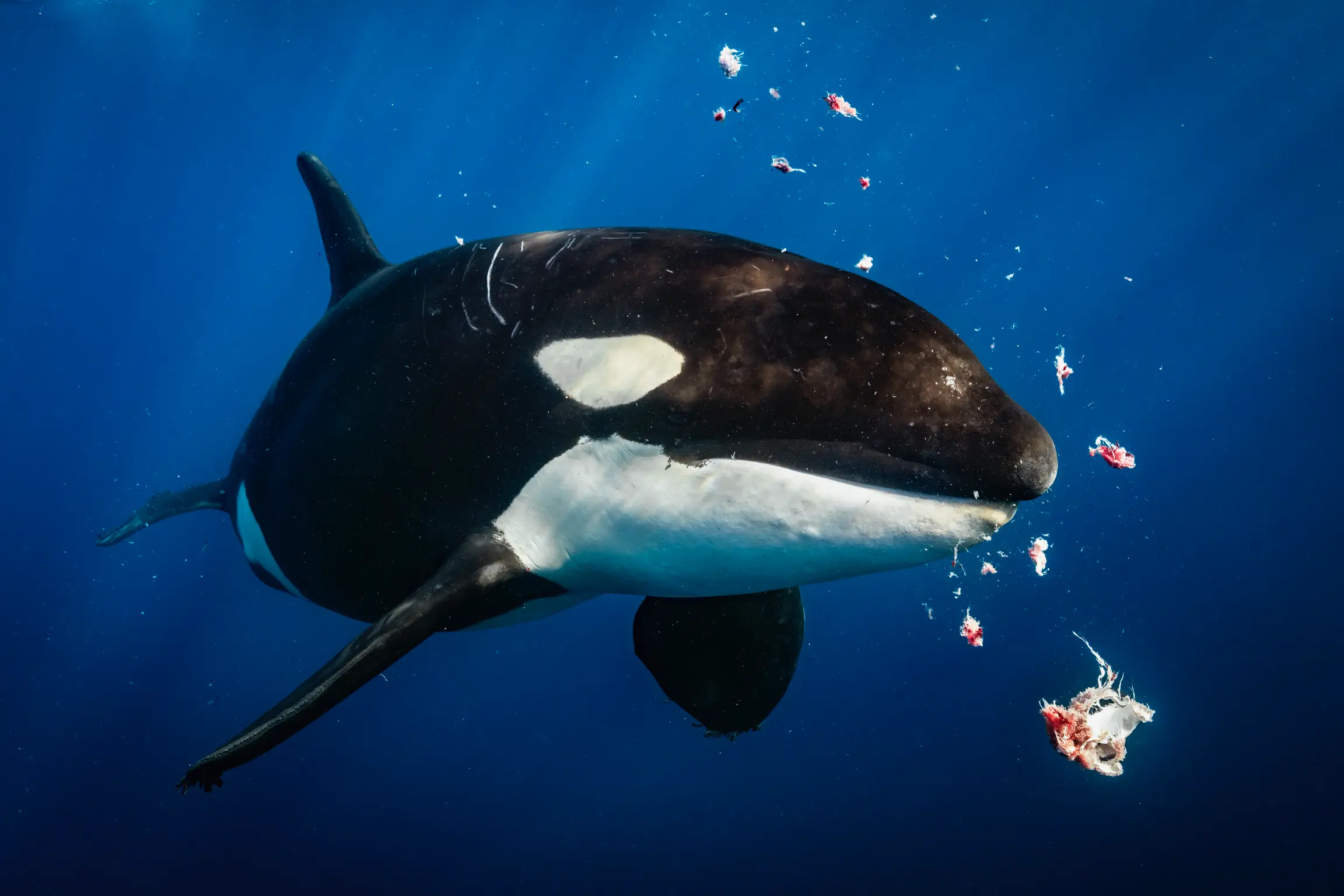
It is one of the most common questions asked by marine enthusiasts and ocean lovers: Are killer whales dolphins, or are they whales? The confusion is entirely understandable. After all, the word “whale” is right there in their name. They are massive, they possess a commanding presence, and they rule the oceans as apex predators.
If you are planning an ocean safari or dreaming of seeing these magnificent creatures in the wild, understanding their true lineage makes encountering them even more spectacular. Let’s dive into the taxonomy, the history of their fierce name, and how you can witness them hunting in the pristine waters of Baja California, Mexico.
The Scientific Verdict: Yes, Orcas Are Dolphins
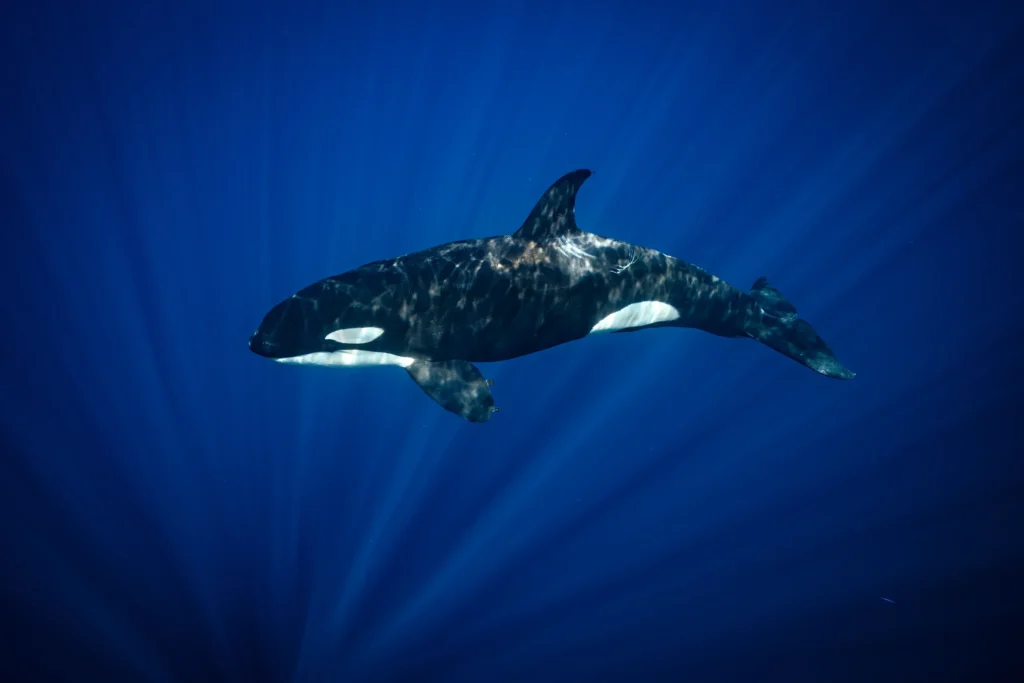
To answer the question immediately: Yes, killer whales (Orcinus orca) are dolphins. In fact, they are the largest members of the dolphin family.
To understand why, we have to look at how scientists classify marine mammals. Both whales and dolphins belong to an order of aquatic mammals called Cetacea (cetaceans). This order is divided into two main suborders:
Mysticeti (Baleen Whales)
These are the true giants of the sea, such as the Blue Whale, Humpback Whale, and Gray Whale. Instead of teeth, they have bristly baleen plates used to filter krill and small fish from the water. They also have two blowholes.
Odontoceti (Toothed Whales)
This suborder includes all cetaceans with teeth and a single blowhole. This group encompasses sperm whales, belugas, narwhals, porpoises, and all dolphins.
Within the Odontoceti suborder, there is a specific family called Delphinidae—the oceanic dolphin family. The killer whale is the largest species within the Delphinidae family. Therefore, while all dolphins are technically toothed whales, not all whales are dolphins. Orcas are scientifically categorized as dolphins.
If They Are Dolphins, Why Are They Called “Killer Whales”?
If an orca is just a very large, highly intelligent dolphin, how did it get such an intimidating, inaccurate name?
The answer lies in history and a centuries-old mistranslation.
Hundreds of years ago, ancient sailors and whalers observed orcas hunting in coordinated, highly strategic packs. They witnessed these apex predators taking down massive marine prey, including actual baleen whales. Impressed and intimidated by their hunting prowess, Spanish sailors named them “asesina ballenas”, which translates literally to “whale killers.”
As the term was translated into English and passed down through generations of mariners, the words were flipped. “Whale killer” eventually morphed into “killer whale.” Over time, the misnomer stuck.
Today, many marine biologists and ocean advocates prefer to use their scientific and indigenous name, Orca, to distance the animal from the misconception that there are virtually no documented fatal attacks on humans in the wild.
Orcas vs. Other Dolphins: What Makes Them Different?

While they share the same genetic family tree as the familiar Bottlenose Dolphin, orcas possess several unique traits that set them apart:
- Massive Size: A male orca can grow up to 32 feet (nearly 10 meters) long and weigh over 6 tons (5,400 kg). Their dorsal fin alone can reach 6 feet (1.8 meters) tall!
- Apex Predator Status: Unlike smaller dolphins that feed primarily on small schooling fish and squid, orcas are the undisputed apex predators of the ocean. Depending on their ecotype (their specific cultural group), their diet can include sea lions, seals, sharks, rays, and even large baleen whales.
- Complex Matriarchal Societies: Orcas have one of the most complex social structures on the planet. They live in tightly knit family pods led by an older matriarch (the grandmother). These pods have unique dialects, hunting techniques, and cultures passed down through generations.
Where Can You See Orcas in the Wild?
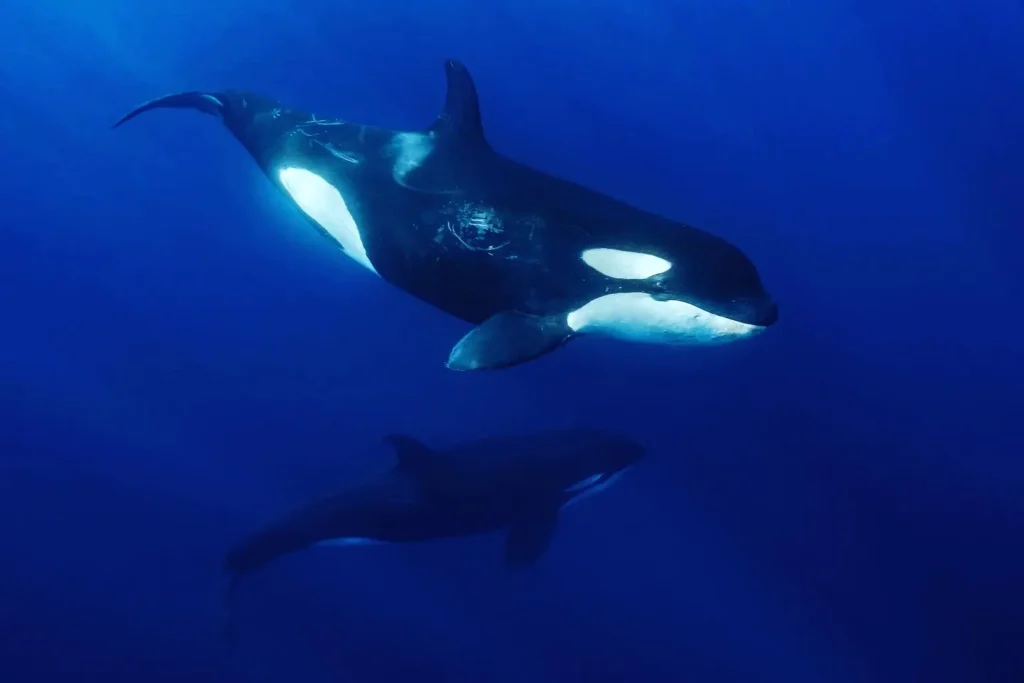
Orcas are the most widely distributed mammal in the world, alongside humans. They live in every ocean, from the freezing waters of the Arctic and Antarctica to the warm tropical seas.
However, if you want a chance to see them actively hunting and displaying their incredible intelligence in warm, clear waters, Baja California Sur, Mexico, is one of the premier destinations on earth.
The Sea of Cortez & Magdalena Bay
In the waters surrounding the Baja peninsula, specifically in the Sea of Cortez (dubbed “The Aquarium of the World” by Jacques Cousteau), orcas are frequently spotted during the spring and summer months.
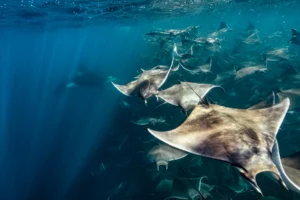
They are drawn to this nutrient-rich region by massive aggregations of prey. One of the most thrilling natural events is the arrival of the mobula rays. When thousands of mobula rays congregate in the Sea of Cortez, transient pods of orcas often follow, utilizing their sophisticated pack-hunting strategies to isolate and capture their prey.
Furthermore, during the famous Marlin Run off the coast of Magdalena Bay, orcas are occasionally seen capitalizing on the massive bait balls of sardines that attract marlin, sea lions, and whales.
Experience the Ocean’s Greatest Predator with Mexico Travel Adventure

Reading about the incredible intelligence and power of the largest dolphin on Earth is one thing; seeing a 30-foot orca breach the surface of the ocean just yards from your boat is a life-changing experience.
At Mexico Travel Adventure (MTA), we specialize in putting you in the right place at the right time. Our expert captains and marine biologist guides understand the seasonal movements and behaviors of these magnificent predators.
If you are ready to witness the raw power of nature, explore our exclusive Orca & Mobula Ray Expedition. During this multi-day oceanic safari, we venture into the heart of the Sea of Cortez to seek out mobula ray aggregations and the apex predators that follow them.
Are you looking for even more pelagic action? Check out our Marlin Run Expeditions to witness one of the most spectacular underwater feeding frenzies on the planet.
The ocean is calling. Don’t just read about orcas come meet them in Baja California.