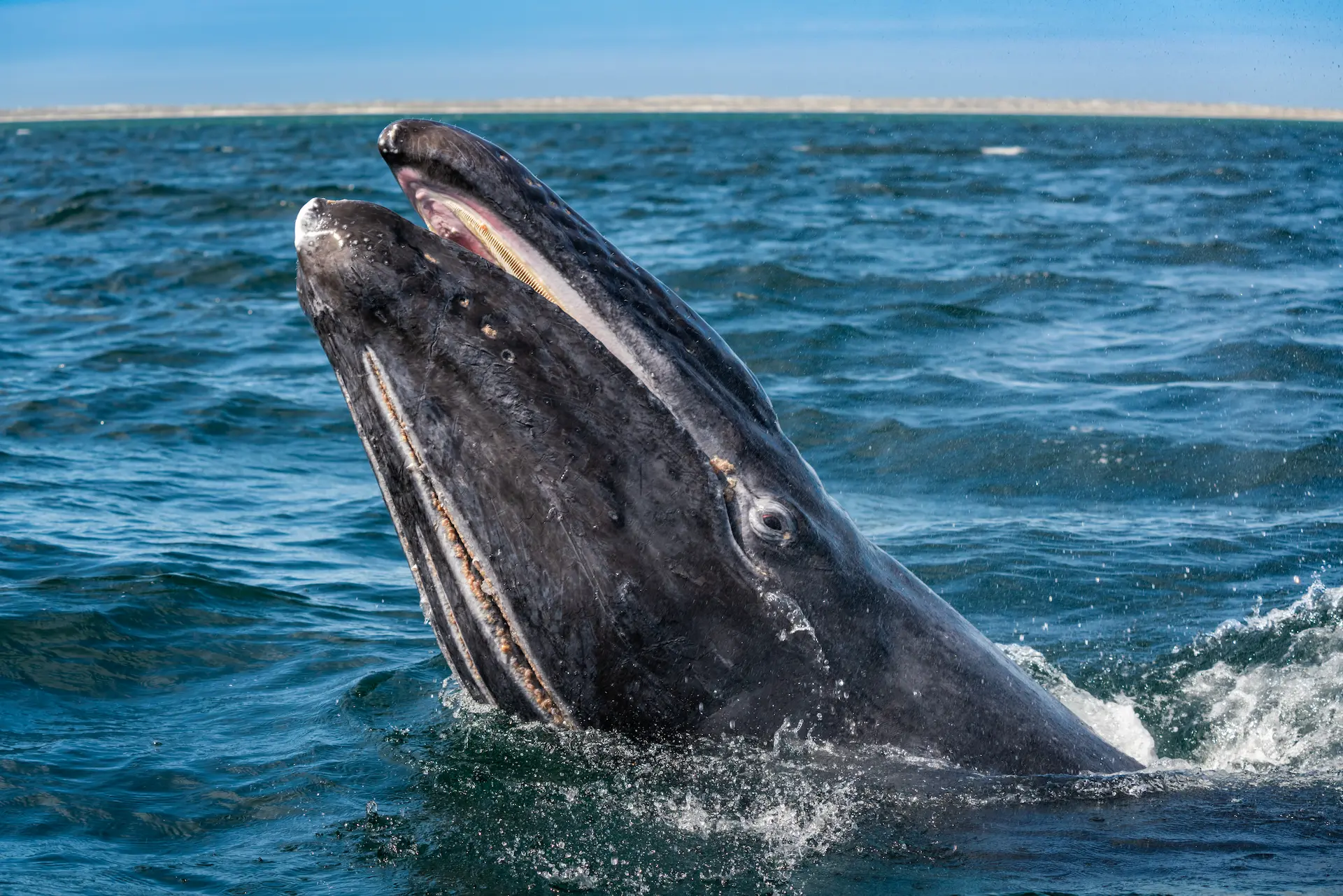
Every winter, the Pacific Ocean witnesses one of the most incredible migrations on Earth. Thousands of Eastern North Pacific gray whales travel over 10,000 miles from the freezing waters of the Arctic down to the warm, protected lagoons of Baja California Sur.
If you are researching Magdalena Bay whale watching, you are already on the right track. Also known as Bahía Magdalena, this vast estuary is arguably the best place on the planet for intimate, respectful encounters with these gentle giants. In this comprehensive 2026 guide, we will cover everything you need to know: from the best time to visit, to official regulations, and what to expect on the water.
Why Magdalena Bay is a Gray Whale Sanctuary
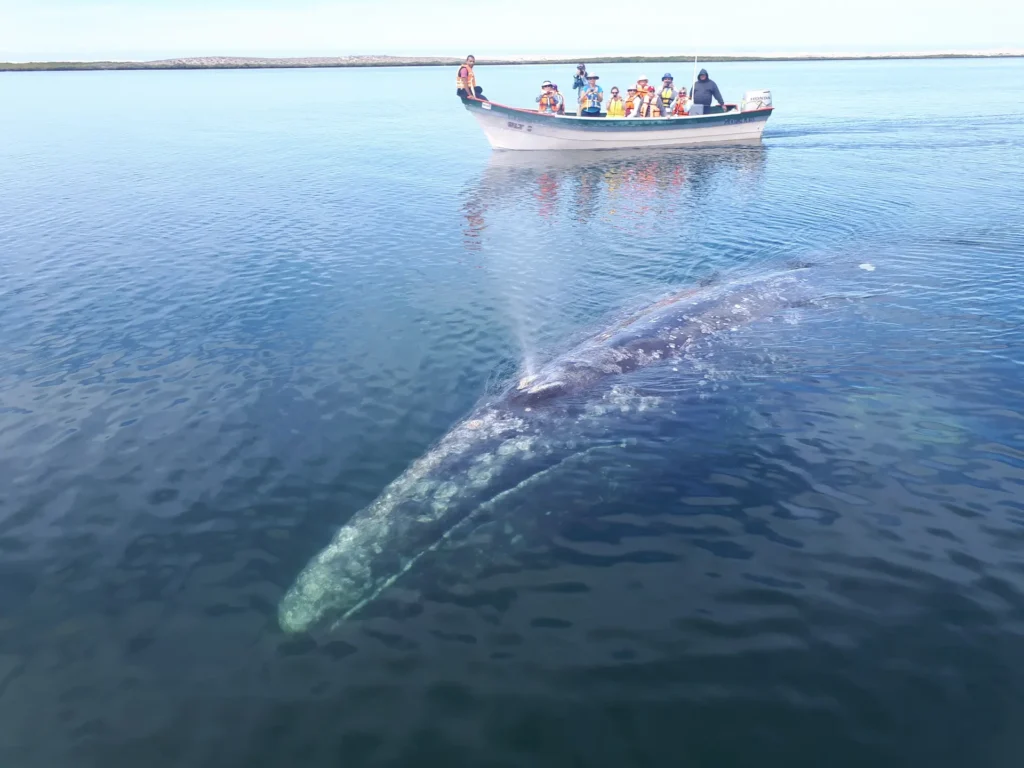
Unlike the open ocean, Magdalena Bay is a shallow, nutrient-rich lagoon shielded from the rough Pacific currents by barrier islands like Isla Magdalena and Isla Santa Margarita.
This unique geography creates a calm, giant “nursery.” Female gray whales (Eschrichtius robustus) seek out these exact waters to give birth and nurse their calves in a predator-free environment.
According to the NOAA Fisheries Gray Whale species directory, the warm waters are crucial for newborn calves, who are born without the thick layer of blubber needed to survive in the Alaskan Arctic.
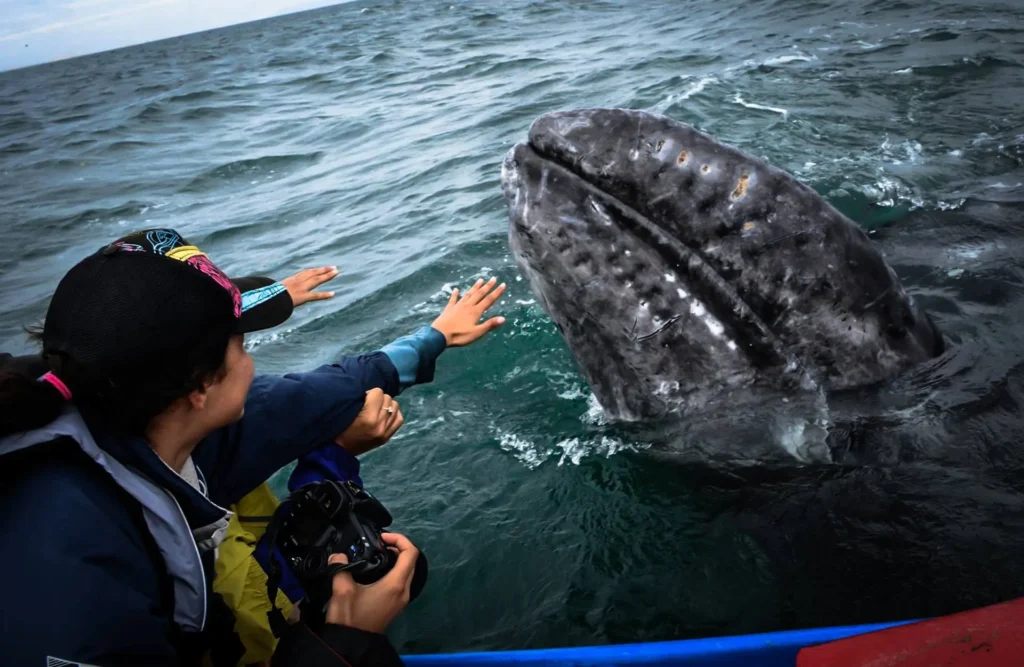
Because the whales feel safe here, they exhibit a behavior rarely seen anywhere else in the world: they are incredibly curious. Often, mothers will actually push their calves toward the boats (locally known as pangas) to investigate their human visitors.
Best Time for Whale Watching in Magdalena Bay (2026)
Timing is everything when planning an expedition to see gray whales in Baja Mexico. While the whales begin arriving in late December, the season operates on a strict schedule to ensure the population’s safety.
- Early Season (January): The first pregnant females arrive and begin giving birth. Tour availability starts, but the population is still growing.
- Peak Season (February to March): This is the golden window for whale watching in Magdalena Bay. The lagoon is heavily populated with mothers, playful calves, and courting adults. The calves are older, more energetic, and incredibly curious about the boats.
- Late Season (April): The whales begin their long journey back north. While sightings are still possible early in the month, numbers drop significantly.
What to Expect on Your Expedition
Visiting Magdalena Bay is an adventure into wild, authentic Baja. Trips are conducted in small, motorized skiffs called pangas, captained by licensed local experts who know the lagoon’s intricate channels.
The “Friendly” Whales
The defining characteristic of a Magdalena Bay tour is the “friendly” whale phenomenon. It is common for a 40-ton mother to approach the boat, spy-hop (poke her head out of the water to look around), and linger closely. While it requires patience, these eye-to-eye encounters are life-changing.
Official SEMARNAT Regulations
To protect this vital ecosystem, the Mexican government strictly regulates all nautical activities. When booking a tour, you must ensure your operator complies with the Official Mexican Standard for Whale Watching (NOM-131-SEMARNAT-2010).
Key rules for 2026 include:
- A maximum speed limit for boats inside the observation area.
- A strict time limit for how long a single boat can stay near a whale.
- Vessels must approach the whales from the side or behind, never blocking their path.
- No swimming or diving with gray whales is permitted; observation is strictly boat-based.
How to Get to Magdalena Bay
The bay is vast, with two main launching points for tours: Puerto San Carlos and Puerto López Mateos.
If you are flying into Baja California Sur, the most convenient hubs are La Paz (LAP) or Loreto (LTO). From La Paz, Puerto San Carlos is roughly a 3.5 to 4-hour drive across the beautiful desert landscape. Because the logistics involve remote driving, renting a vehicle, and finding certified boat captains, many travelers find DIY trips stressful.
Why Book a Guided Tour with Experts?
To truly enjoy this natural spectacle without the hassle of navigating desert roads, securing permits, and finding reliable local captains, joining a fully guided expedition is the smartest choice.
At Mexico Travel Adventure, we handle every detail of your journey. Our certified naturalists provide deep biological insights, and we partner only with the most responsible, licensed local captains to ensure your encounter is both safe and breathtaking.
👉 Ready for the encounter of a lifetime? Book your Gray Whale Expedition in Magdalena Bay here and let us take you to the heart of the sanctuary.