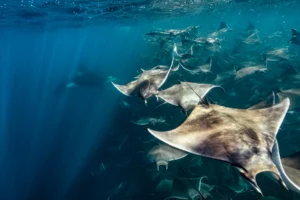

If you are planning a diving or snorkeling trip to the Sea of Cortez, you have likely seen incredible footage of divers playing with curious, puppy-like marine mammals.
The California sea lion (Zalophus californianus) is one of the most interactive and intelligent animals you can encounter underwater. But as you prepare to jump into the water at famous dive sites like Los Islotes, a question arises: Are sea lions dangerous?
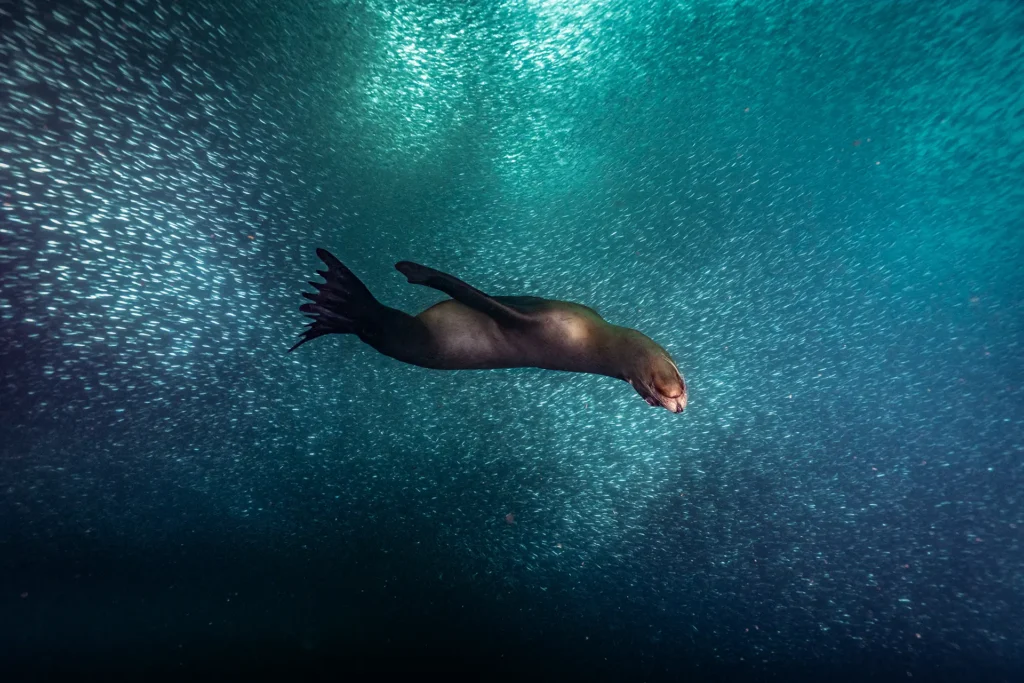
The short answer is no; Sea lions are generally not aggressive toward humans, and swimming with them is generally considered safe and highly enjoyable. However, they are large, wild predators. Like any wild animal, their behavior can change based on the season, their environment, and how humans interact with them.
In this comprehensive guide, we will dive deep into sea lion behavior, separate the myths from reality, and provide you with expert tips on how to safely interact with these “wolves of the sea” during your Baja California adventure.
Understanding California Sea Lion Behavior
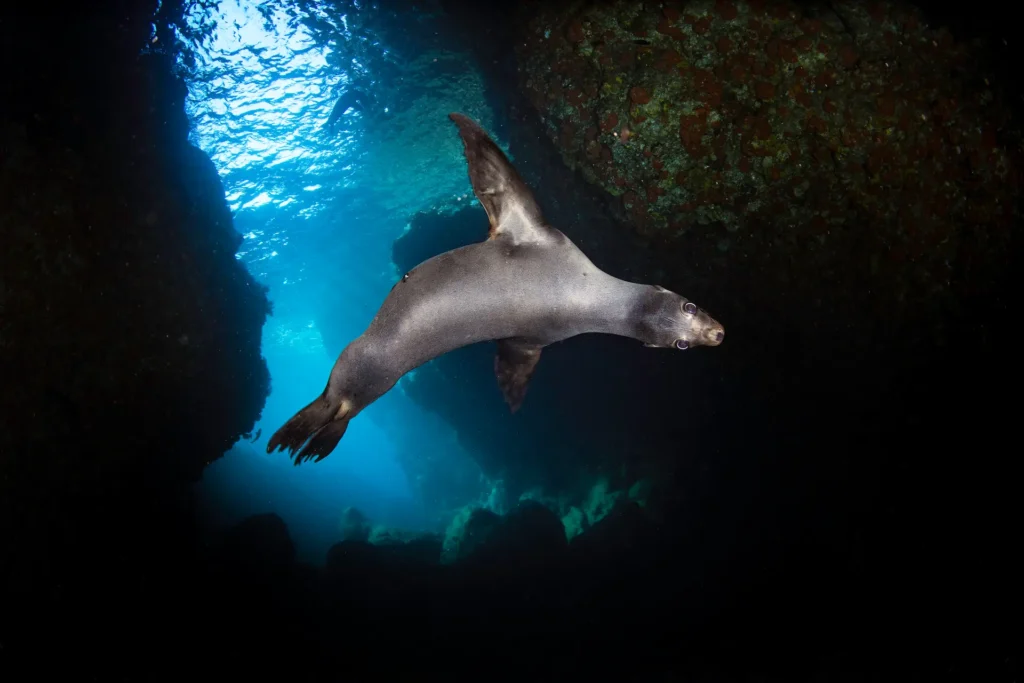
To understand whether sea lions pose a threat, we first need to understand their natural behavior. California sea lions are highly social, intelligent, and naturally inquisitive creatures.
The Playful Pups and Females
The vast majority of underwater interactions that divers experience are with females and juvenile sea lions (pups). Juveniles, much like human toddlers or puppies, explore the world through play. They are notorious for zooming past divers, blowing bubbles, doing underwater somersaults, and occasionally nibbling gently on diving fins or camera domes. This behavior is rooted in curiosity, not aggression.
The Territorial Bulls
The dynamic changes when dealing with adult males, known as bulls. A mature bull can weigh up to 850 pounds (390 kg) and measure over 7.5 feet (2.3 meters) in length.
During the mating season (which peaks from late May through July in Baja California), bulls become highly territorial. They patrol the waters around their harem of females and will actively bark, blow bubbles, and display aggressive posturing to chase away perceived threats—including divers who get too close.
So, Are Sea Lions Dangerous to Humans?

Statistically, sea lion attacks on humans are incredibly rare. According to marine biologists and the Marine Mammal Center, sea lions do not view humans as prey. When incidents do occur, they are almost always a result of human error or a misunderstanding of the animal’s boundaries.
Here are the specific scenarios where a sea lion could potentially become dangerous:
- Provocation and Harassment: Attempting to pet, chase, or corner a sea lion will trigger its defensive instincts. If a sea lion feels trapped, it may bite to protect itself.
- Mating Season Aggression: Getting between a territorial bull and his females is the most common cause of underwater incidents. A charging bull is an intimidating sight, and while they usually do “mock charges” to warn you off, they will bite if you ignore their warnings.
- Health Risks (Zoonotic Diseases): Even a minor, playful nip from a sea lion can break the skin. Sea lion mouths contain specific bacteria that can cause a severe infection known as “seal finger” (Mycoplasma phocacerebrale). If you are ever bitten or scratched, immediate medical attention and specialized antibiotics are required.
Best Practices for Safely Swimming with Sea Lions
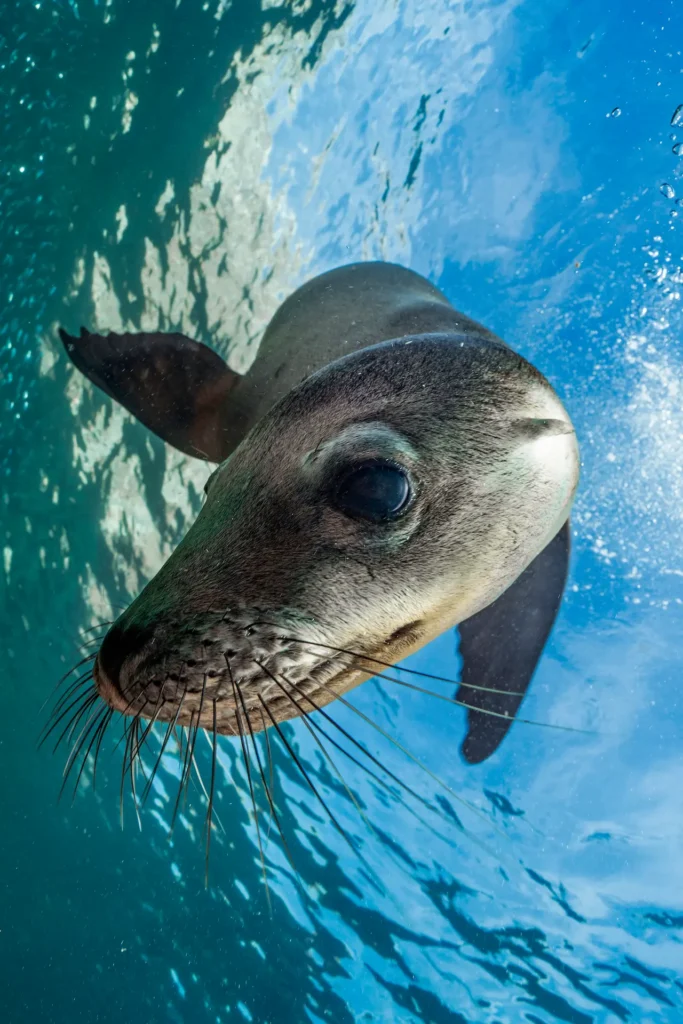
At Mexico Travel Adventure, safety is our top priority. We have taken thousands of guests to interact with these magnificent creatures without incident.
Whether you are an experienced scuba diver or trying out our Discover Scuba Diving in La Paz program, following these rules ensures a safe and unforgettable experience:
- Let Them Approach You: Never chase a sea lion. If you float calmly in the water, their natural curiosity will bring them to you. Fast, aggressive swimming will either scare them away or put them on the defensive.
- Keep Your Hands to Yourself: It is illegal and unsafe to touch marine mammals. Even if a pup comes right up to your mask, keep your arms folded across your chest or your hands close to your body.
- Respect the Bulls: Listen to your divemaster. If an adult male begins blowing large bubbles, barking underwater, or darting aggressively toward you, calmly slowly back away from the colony while keeping your eyes on the animal.
- Do Not Block Their Path: Sea lions need to surface to breathe and return to the rocky shores to rest. Never block their path to the surface or the shoreline.
- Secure Your Gear: Pups love to play with loose straps, brightly colored snorkels, and camera equipment. Keep your gear streamlined to avoid a playful game of tug-of-war that you will inevitably lose.
Where is the Best Place to Swim with Sea Lions in Baja?
If you want to experience the magic of swimming with friendly sea lions in their natural habitat, there is no better place on Earth than the Sea of Cortez.
The highlight of sea lion encounters is Los Islotes, a small rocky outcropping located at the northern tip of Espíritu Santo Island, just off the coast of La Paz. This colony is home to over hundreds of California sea lions. Because they have been exposed to respectful eco-tourism for decades, the sea lions here are exceptionally habituated and playful.
Ready to meet them face-to-face? Explore our Espíritu Santo Island Adventure, which includes guided snorkeling at Los Islotes, pristine beaches, and world-class marine biology insights from our expert guides.
Alternatively, if you are looking to combine sea lion interactions with the thrill of pelagic encounters like giant mantas, consider checking out our Diving Socorro & Revillagigedo Offers, where sea lions often make surprise appearances alongside ocean giants.
A Thrilling, Safe Encounter
So, are sea lions dangerous? When treated with the respect that wild animals command, the answer is a resounding no. They are incredibly graceful, joyful animals that offer one of the most interactive wildlife experiences possible.
By understanding their behavior, avoiding territorial bulls during mating season, and booking your trip with certified, responsible operators, you can safely enjoy the underwater acrobatics of the Sea of Cortez’s most charismatic residents.