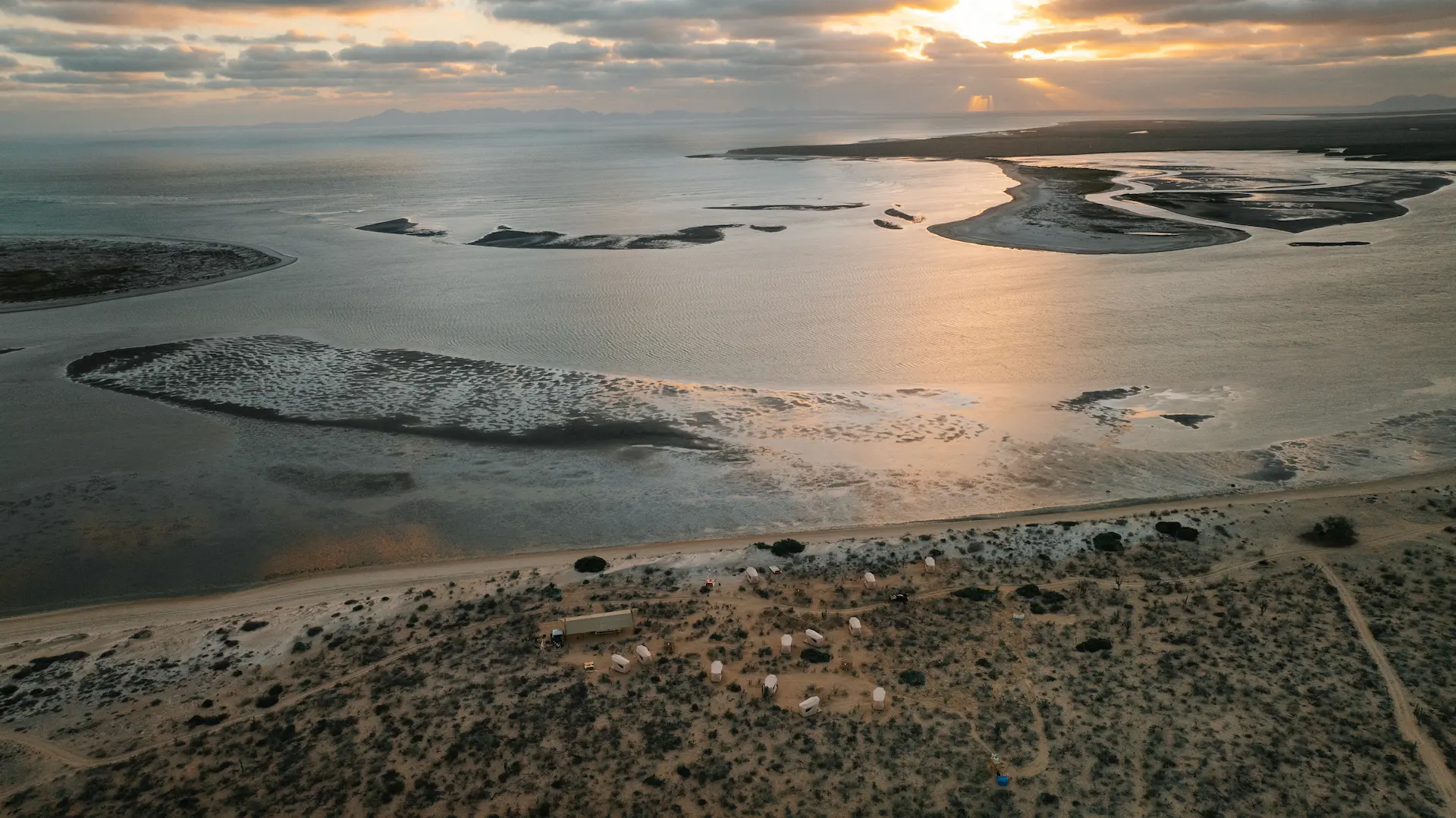
When legendary oceanographer Jacques Cousteau first explored the waters separating the Baja California Peninsula from mainland Mexico, he famously dubbed it the “Aquarium of the World.” Today, the Sea of Cortez (also known as the Gulf of California) remains one of the most biologically diverse marine environments on the planet.
Planning a dive trip to this massive, 700-mile-long body of water can be overwhelming. Where are the best spots to see mobula rays? How far is Socorro Island from Cabo San Lucas? Where can you safely swim with sea lions or whale sharks?
To help you plan the diving expedition of a lifetime, our marine biologists and expert divemasters at Mexico Travel Adventure have created The Ultimate Sea of Cortez Dive Map. In this guide, we explore the major diving regions on the map, detailing the marine life you can expect to see and the best times to visit.
How to Navigate the Map
Click on the interactive pins to explore regions. Hover over or click specific dive sites to see more details.
Cabo Pulmo National Marine Park
Home to one of the oldest and most successful coral reef conservation areas in the Pacific, Cabo Pulmo offers thriving reefs, large schools of fish, sea turtles, rays, and occasional shark encounters in a remarkably healthy marine ecosystem.
- El Bajo
- El Vencedor
- El Cantil
- El Cantilillo
- La Esperanza
- Outer Pulmo
- El Islote
- Las Casitas
- El Pedregal
- El Cien Norte
- El Cien Sur
La Ventana & Cerralvo Island
Situated along the western shores of the Sea of Cortez, La Ventana offers access to offshore reefs and seamounts where divers can encounter rays, large schools of fish, seasonal sharks, and other pelagic species like dolphins, whales and orcas.
- La Reina
- La Reinita
- Isla Cerralvo
La Paz & Espíritu Santo Island
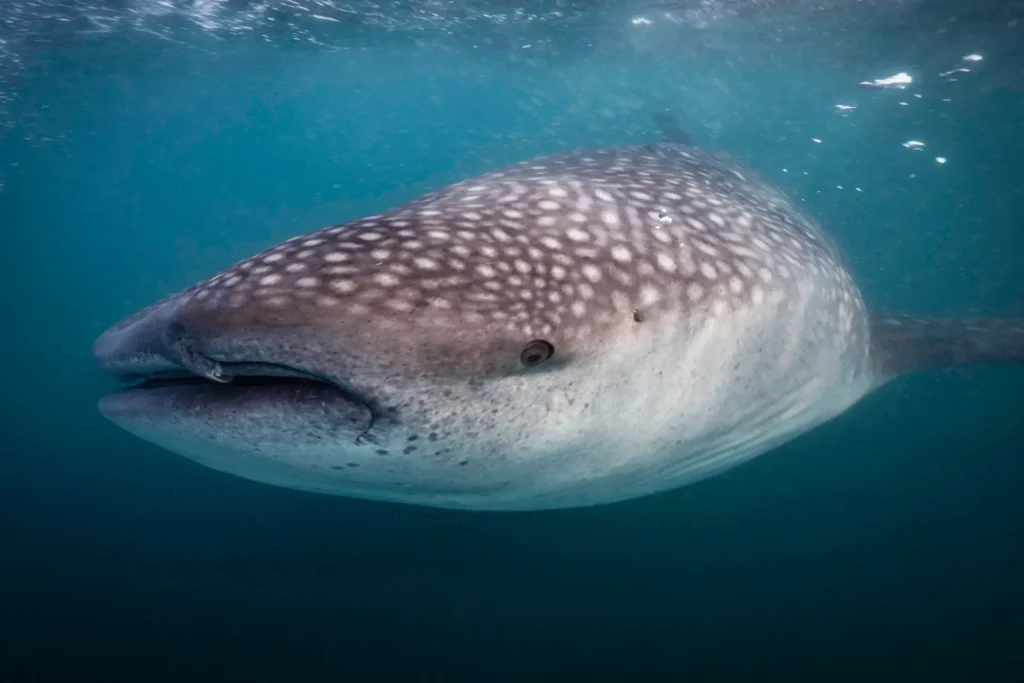
A premier marine destination in the Sea of Cortez, La Paz is famous for whale sharks, sea lions, pristine beaches, and diverse reefs. Its protected waters host an extraordinary variety of marine life year-round.
- Whale Shark
- Archipiélago Espíritu Santo
- San Rafaelito
- El Salvatierra
- Swanne
- Fang Ming
- Isla Ballena
- El Bajito
- Los Islotes
- El Bajo
- Punta Lobos
- C-59
Magdalena Bay
A vast coastal lagoon system recognized for gray whale migrations and highly productive marine ecosystems. Mangroves, estuaries, and offshore waters support abundant marine mammals, seabirds, and fish populations.
- Puerto Adolfo López Mateos
- Puerto Chale
- Puerto San Carlos
- Gray Whale
- Marlin Run
The Revillagigedo Archipelago (Socorro)
A remote UNESCO World Heritage Site renowned for world-class diving. Its nutrient-rich waters attract giant manta rays, dolphins, sharks, tuna, and large pelagic species in one of the most pristine marine ecosystems on Earth.
- The Boiler
- Las Cuevitas
- The Canyon
- Punta Tosca
- Cabo Pearce
- O’neil Rock
- Roca Partida
- Isla Clarión
- Isla San Benedicto
- Isla Socorro
Cabo San Lucas
Known for its dramatic rock formations and vibrant marine life, Cabo San Lucas offers excellent diving and snorkeling opportunities with sea lions, reef fish, rays, and seasonal visits from sharks and migrating whales.
- El Arco
- Roca Pelícano
- La Empacadora
- Lands End
- El Golfito
- South wall
- La Chimenea
- Neptune’s finger
- Middle wall
- North wall
- Santa Maria
- Blow hole
- Gavilanes
- Chileno Bay
- Skywalker
- Cerro Colorado
- Punta Bella
- Los Abanicos
- Escollera
- Shipwreck
- Zacatitos
- Gordo Banks
Loreto
A protected marine park encompassing several islands and diverse habitats. Its clear waters, volcanic reefs, and abundant marine life make it an exceptional destination for snorkeling, diving, and wildlife encounters.
- Isla Coronado
- Isla Danzante
- Isla del Carmen
- Punta Coyote
- Bajo De Las Tijeras
- El Bajo de Danzante
Todos Los Santos
Bordered by the Pacific Ocean, Todos Santos provides access to productive coastal waters where seasonal whale sightings, sea turtles, rays, and diverse marine life can be observed throughout the year.
San José del Cabo
Located at the meeting point of the Sea of Cortez and the Pacific Ocean, San José del Cabo features diverse marine habitats, rocky reefs, and seasonal encounters with tropical fish, rays, sea turtles, and pelagic species.
Los Barriles
A coastal destination on the Sea of Cortez known for its clear waters and diverse marine habitats. Visitors may encounter rays, tropical fish, sea turtles, and seasonal pelagic species throughout the year.
Why the Sea of Cortez is a Global Diving Hotspot
Before we dive into the specific locations on our map, it is important to understand what makes this region so special. The Sea of Cortez is a UNESCO World Heritage site, home to over 900 species of fish, 32 types of marine mammals, and thousands of invertebrate species.
Its unique topography—featuring deep ocean trenches, shallow bays, and volcanic islands—creates powerful upwellings of nutrient-rich water. These nutrients fuel a massive food web that attracts the ocean’s most spectacular apex predators and pelagic giants.
Exploring the Map: Top Dive Regions in Baja California Sur
Let’s navigate through the key regions highlighted on your dive map, starting from the southern tip and moving north, including a special detour to the Pacific’s most famous archipelago.
1. Cabo Pulmo National Marine Park
Located on the east coast of the Baja Peninsula, Cabo Pulmo is a testament to the power of ocean conservation. Once depleted by overfishing, the local community banned fishing in 1995. Today, it boasts a staggering over 460% increase and is home to the oldest of only three coral reefs on the west coast of North America.
Marine life highlights
Massive tornados of bigeye trevally (jack fish), bull sharks, groupers, and sea turtles.

- Best for: Divers looking for thriving reef systems and dense schools of fish.
2. La Ventana & Cerralvo Island (Jacques Cousteau Island)
Just south of La Paz, La Ventana and the adjacent Cerralvo Island offer some of the most dynamic blue-water encounters in the world. Deep drop-offs close to shore bring pelagic action within easy reach.
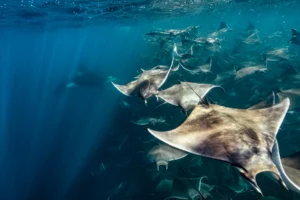
Signature encounters: This is the epicenter for the magnificent Mobula Ray aggregations (thousands of jumping rays) and the apex predators that hunt them, including Orcas (Killer Whales).

Suggested expedition: Join our specialized Orca & Mobula Ray Expedition to witness this breathtaking spectacle.
3. La Paz & Espíritu Santo Island
La Paz is the gateway to the Sea of Cortez. The main attraction of this region is Espíritu Santo Island, a protected biosphere reserve surrounded by turquoise waters and red rock formations.
Key species
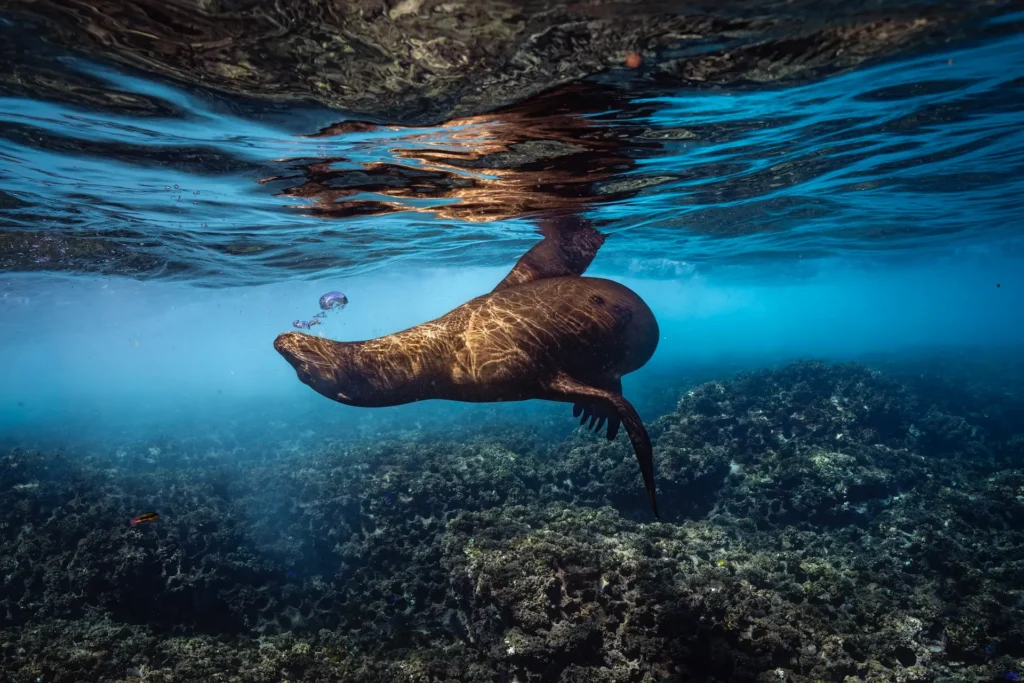
The northern tip of the island, Los Islotes, is famous for its resident colony of friendly California sea lions. The nearby Bay of La Paz is also a globally recognized hotspot for swimming with Whale Sharks.
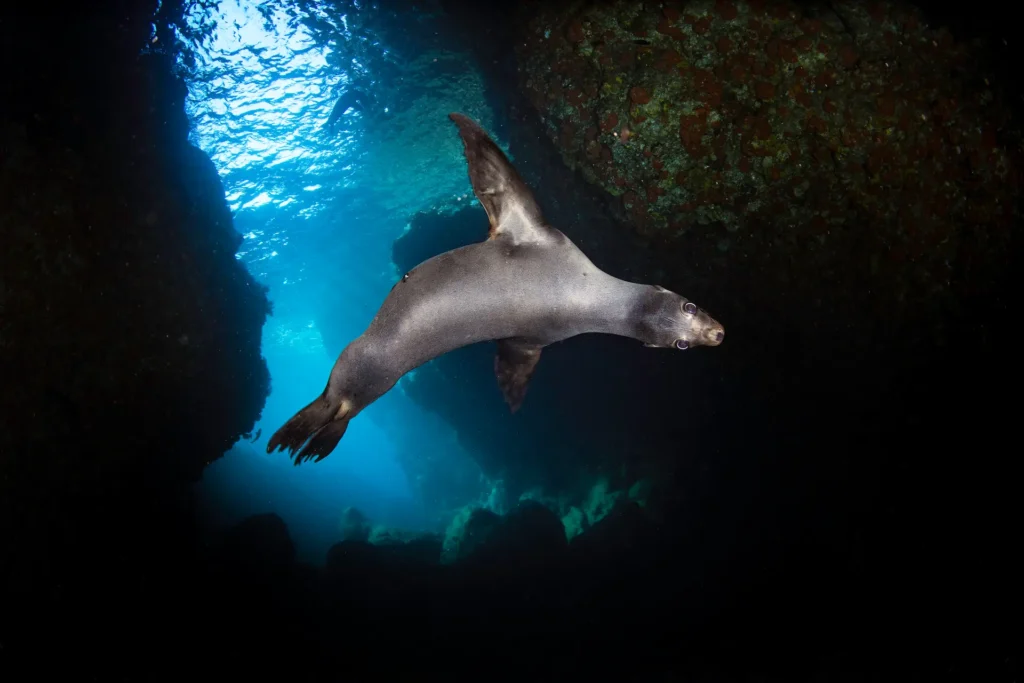
Experience it: Book our Espíritu Santo Island Adventure for a perfect mix of snorkeling, diving, and pristine beach exploration.
4. Magdalena Bay (The Pacific Coast Extension)
While technically on the Pacific side of the Baja Peninsula (and marked on the western edge of our map), Magdalena Bay is a crucial stop for any Baja diving itinerary.
Underwater highlights
From October to December, this area hosts the world-famous Marlin Run. Massive bait balls of sardines attract striped marlin, sea lions, whales, and birds in a feeding frenzy that rivals the South African Sardine Run. In the winter, it becomes a sanctuary for Gray Whales.
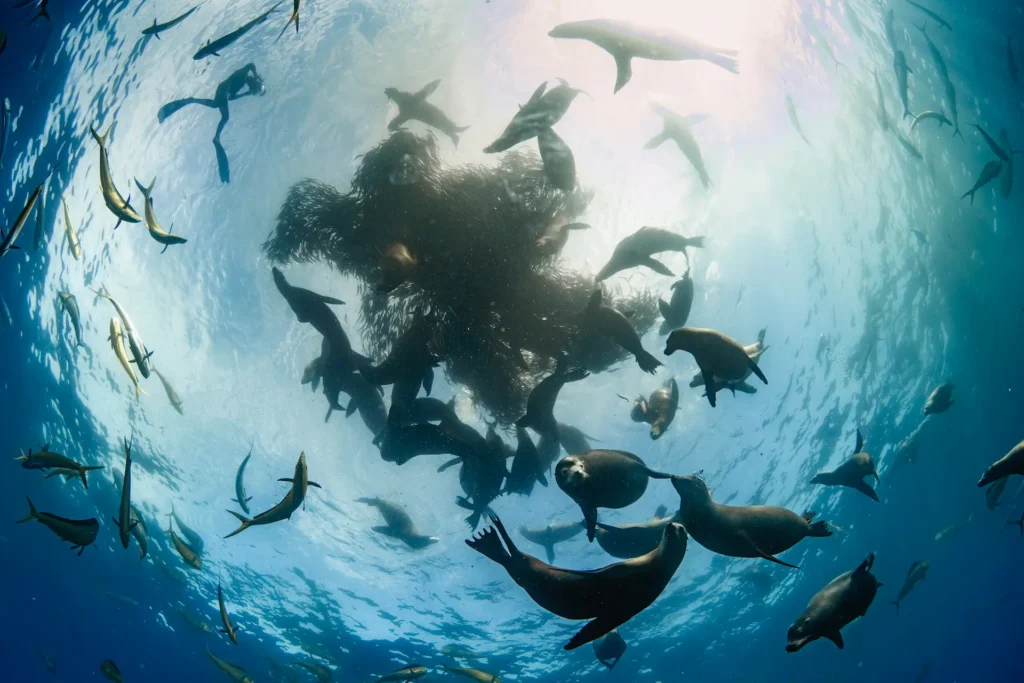
Recommended tour: Dive into the action with our Marlin Run Expeditions.
5. The Revillagigedo Archipelago (Socorro Island)
Look at the inset box on the bottom left of our map. Located about 250 miles (400 km) south of Cabo San Lucas in the open Pacific Ocean, the Revillagigedo Archipelago (often simply called “Socorro”) is Mexico’s version of the Galapagos. Accessible only via liveaboard dive boats, this isolated volcanic chain is a pelagic wonderland.
What to see
The friendliest Giant Oceanic Manta Rays on Earth, more than 10 species (including hammerheads, silky sharks, and whitetips), bottlenose dolphins, and migrating humpback whales in the winter.
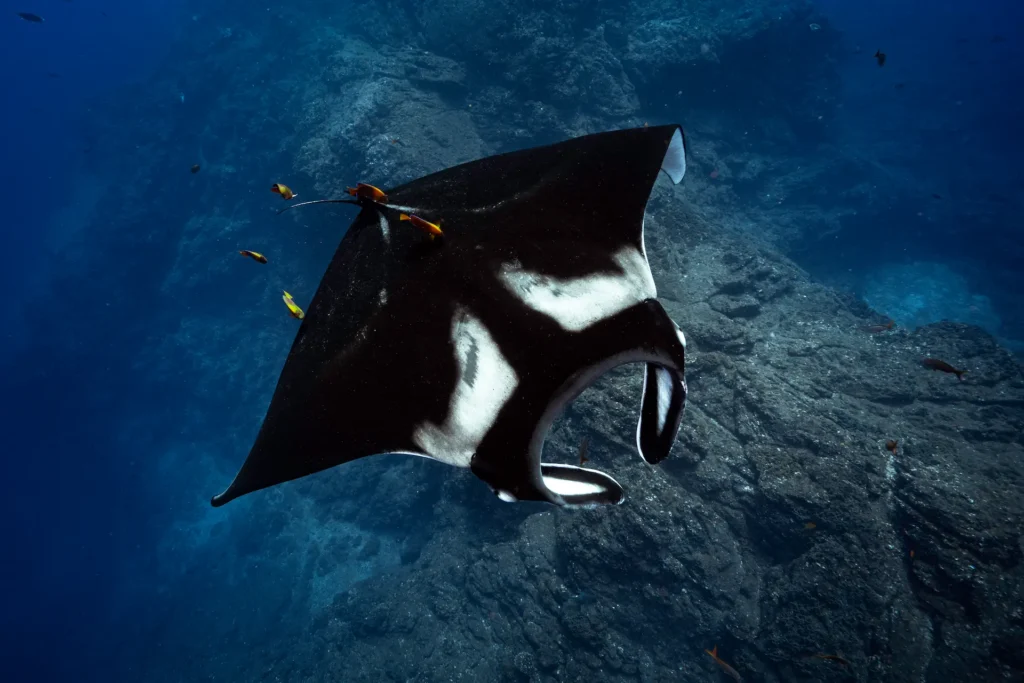
Best way to explore it: Secure your cabin on one of our premium Socorro Liveaboard Diving Expeditions.
When is the Best Time to Dive the Sea of Cortez?
Your experience in the Gulf of California will vary wildly depending on the season:
Late Summer/Autumn (August – November): The best time for traditional scuba diving. The water is incredibly warm (up to 85°F / 29°C), and visibility can exceed 100 feet (30 meters). This is peak season for sea lions, hammerheads, and the Marlin Run.
Winter/Spring (December – April): The water cools down significantly (dropping to 65°F / 18°C), bringing nutrient-rich currents. Visibility drops, but this is the prime season for the big filter feeders: Whale Sharks, Gray Whales, Humpback Whales, and Blue Whales. It is also the exclusive season for Socorro Liveaboards.
Let the Map Be Your Guide
The Sea of Cortez is not a place you visit just once. From the playful sea lions of La Paz to the majestic mantas of Socorro Island, the Aquarium of the World holds enough underwater magic for a lifetime of exploration.
Use this map to dream up your next adventure, and when you are ready to turn that dream into reality, the local experts at Mexico Travel Adventure are here to guide you. Whether you need a day trip or a week-long liveaboard, we have the perfect itinerary for your skill level.
Contact Us Today to Start Planning Your Baja Scuba Adventure