If you search online for a generic whale watching packing list, you’ll likely find advice meant for tourists standing on the heated, glass enclosed decks of massive Alaskan cruise ships.
But whale watching in Baja California Sur is an entirely different beast.
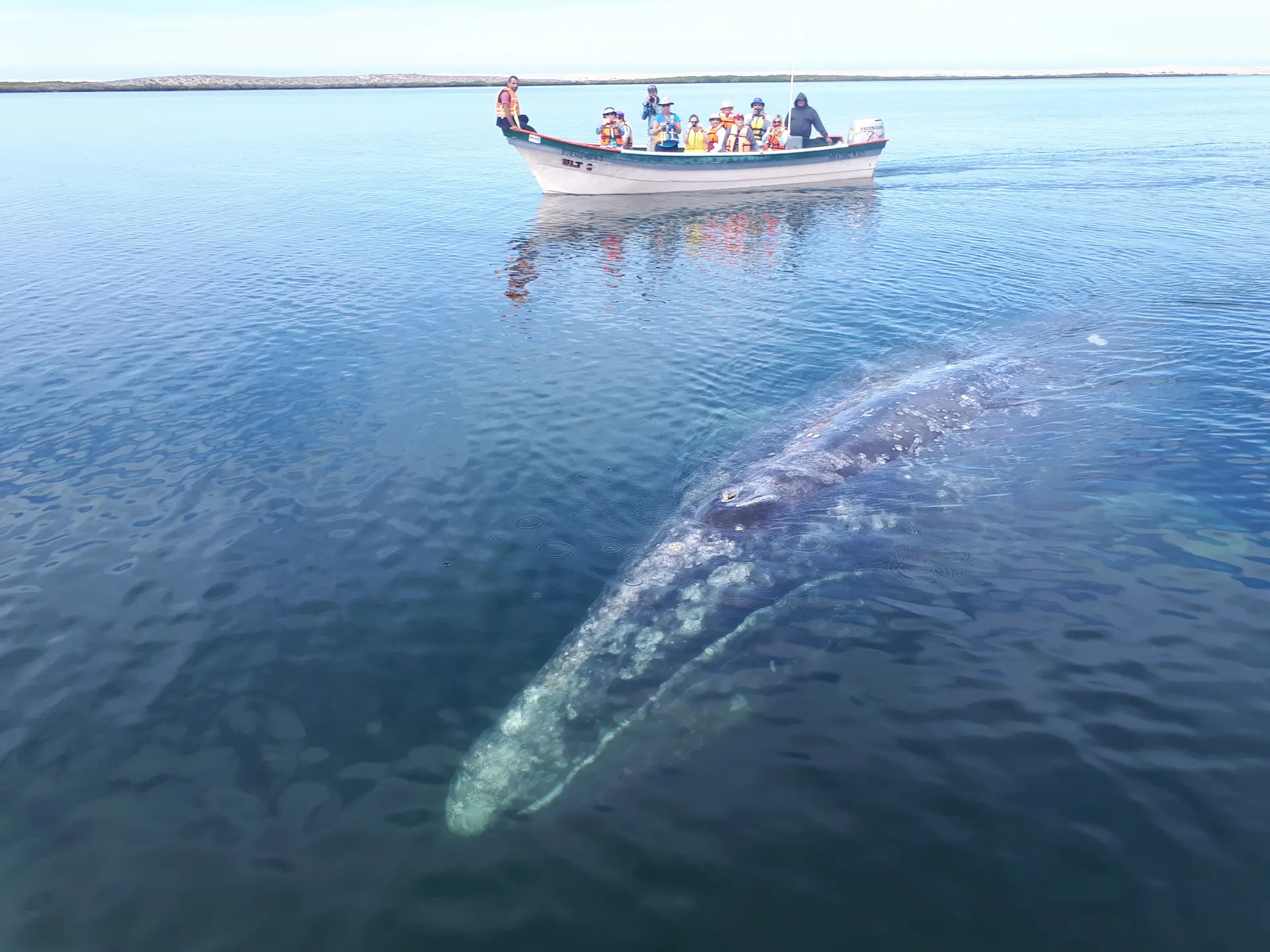
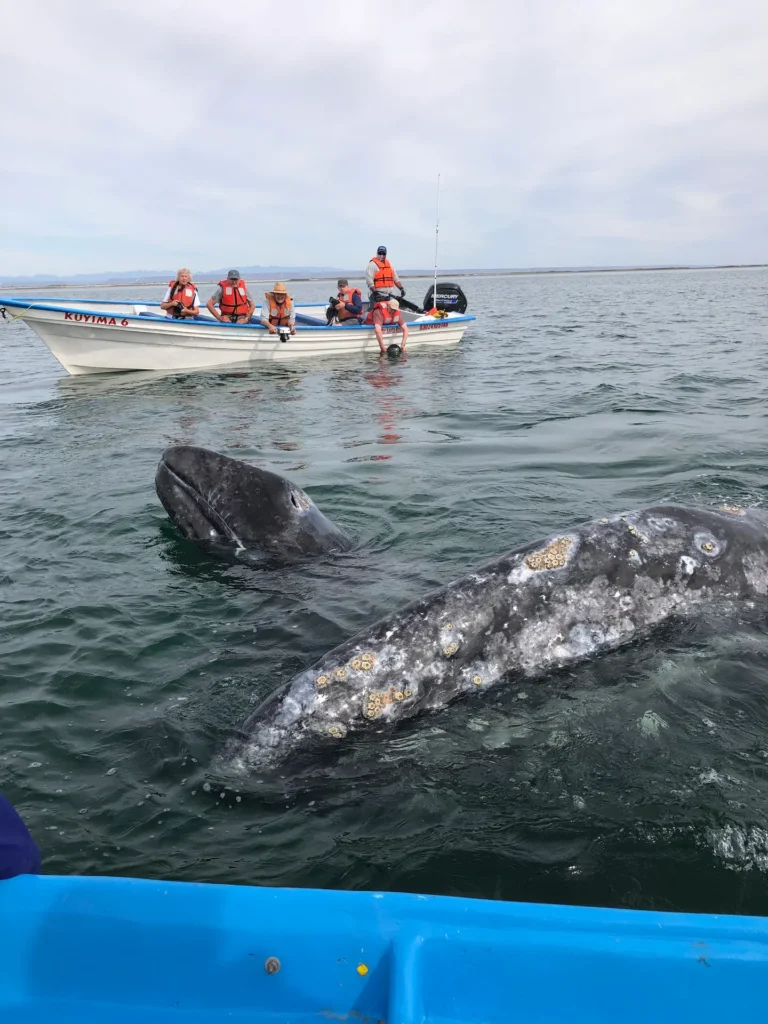
Down here, the ultimate marine encounters whether you are coming face to face with a 40-ton gray whale in Magdalena Bay or swimming alongside a massive whale shark in La Paz happen in pangitas. These are agile, 24- to 28-foot open-air skiffs.
While they give you unparalleled, water-level intimacy with the wildlife, they also expose you directly to the elements: relentless desert sun, salty sea spray, and serious wind chill when you’re cruising at 20 knots.
To make sure you stay comfortable, protected, and ready to capture the moment, we’ve engineered the definitive, no-nonsense packing list specifically tailored for Baja’s open-ocean safaris.
The “Panga” Reality: Sun, Wind, and Sea Spray
The biggest rookie mistake travelers make when packing for Baja is assuming that “Mexico” always equals tropical heat. Sure, the daytime air temperature in winter (January to March) can hit a beautiful 78°F (25°C), but those early morning boat rides tell a different story.
When your panga throttles up to 18-21 knots to track down a migrating pod, the wind chill drops the perceived temperature dramatically.
During a crisp winter morning (16-22 °C / 60-71 °F), this cruising speed combined with the open air can drop the actual wind chill down to 10 °C (50 °F), especially after you’ve been swimming and are wearing a wet swimsuit.
This is why bringing a towel, a waterproof windbreaker, and a dry change of clothes is absolutely essential for the moment you finish your in-water activities. Plus, the Sea of Cortez and the Pacific Ocean experience distinct thermal shifts during peak wildlife seasons.
To help you plan your gear without the guesswork, our captains rely on this operational weather matrix:
| Season / Months | Sea Surface Temperature (SST) | Avg. Air Temperature |
| Winter (Dec – Feb) | 19–22 °C (66–72 °F) | 20–22 °C (68–72 °F) |
| Spring (Mar – May) | 21–25 °C (70–77 °F) | 21–24 °C (70–75 °F) |
| Summer (Jun – Aug) | 27–30 °C (81–86 °F) | 25–31 °C (77–88 °F) |
| Fall (Sep – Nov) | 26–29 °C (79–84 °F) | 27–29 °C (81–84 °F) |
Mastering the Layers (Clothing Essentials)
Because the temperature swings wildly between a crisp 8:00 AM departure and a sun-baked 1:00 PM return, layering isn’t just a suggestion it’s a requirement.
- The Base Layer (Moisture-Wicking): Leave the cotton t-shirts in your hotel room. They absorb sea spray and sweat, leaving you cold and clammy. Go for long-sleeved, UPF 50+ rash guards or synthetic performance shirts instead.
- The Mid Layer (Insulation): A lightweight, easily compressible fleece pullover or a synthetic down vest is your best friend. It traps body heat during the brisk morning run and stuffs easily into a dry bag by noon.
- The Outer Shell (Wind & Waterproof): This is your ultimate shield. A high-quality, breathable rain jacket or marine windbreaker is non-negotiable. It cuts through the freezing wind and keeps you dry from the inevitable ocean splash when cutting through choppy waters.
- Bottoms: Quick-dry travel pants or board shorts layered over leggings work best. Avoid heavy denim jeans at all costs if they get splashed, they stay heavy and wet all day.
Protecting Your Tech (MTA Expert Specs)
When you are leaning over the gunwale of a panga to capture an unforgettable Gray Whale Expedition encounter, your electronics are completely at the ocean’s mercy.
Protecting your gear is just as critical as protecting yourself.
| Technical Gear | Official MTA Specification | Logistic & Regulatory Purpose |
| Small Dry Bag | 10 L capacity | Ideal for securing small essentials like your smartphone, car keys, and prescription glasses. |
| Large Dry Bag | 20 L – 30 L capacity | Highly recommended to safely store your electronics alongside a dry change of clothes, your towel, and windbreaker. |
| Full Wetsuit | 5 mm thickness | Maximum thermal retention in winter waters (19-22 °C) and protection against jellyfish. Mandatory by CONANP regulations if a life jacket is not worn. |
| Short Wetsuit (Shorty) | 3 mm thickness | Increased agility for active swimmers in spring/fall. Mandatory by CONANP regulations if a life jacket is not worn. |
- Polarized Sunglasses with a Floating Lanyard: The glare off the Sea of Cortez can be blinding. Polarized lenses are absolutely essential they cut right through the surface reflection so you can actually see the whales swimming beneath you. And always attach a floating strap; the ocean claims hundreds of designer sunglasses every single season.
- Action Cameras & Telescopic Pole: A DSLR with a telephoto lens is fantastic for capturing breaching whales on the horizon, but a GoPro on a telescopic pole is the ultimate tool for filming a curious gray whale approaching the boat.
- Reef-Safe Sunscreen Only: Traditional sunscreens pack chemicals like oxybenzone and octinoxate that devastate marine ecosystems. The Mexican government strictly enforces the use of biodegradable, reef-safe sunscreens inside protected areas.
Gearing Up for In-Water Encounters
If your itinerary involves actually slipping into the water, your packing strategy needs a slight tweak.
When you join our official Whale Shark Season Complete Guide & Tour, you will be swimming in waters that hover around 68°F (20°C) during peak season.
We provide the professional grade wetsuits and sanitized snorkeling gear, but we highly recommend bringing along a few personal items:
- A quick-dry microfiber travel towel.
- A snug-fitting beanie (you lose most of your body heat through your head the second you climb out of the water).
- A reusable insulated water bottle (hydration is crucial after swimming in the salty ocean).
Ready for the Safari?
Packing the right gear is just the first step of your adventure. The next is choosing an operator that prioritizes safety, ethical wildlife practices, and your overall experience.
At Mexico Travel Adventure, our seasoned captains and marine biologists make sure you are perfectly positioned for the encounter of a lifetime. Leave the generic cruise ship packing lists behind. Pack smart, dress in layers, and let us guide you into the wild heart of Baja California Sur.