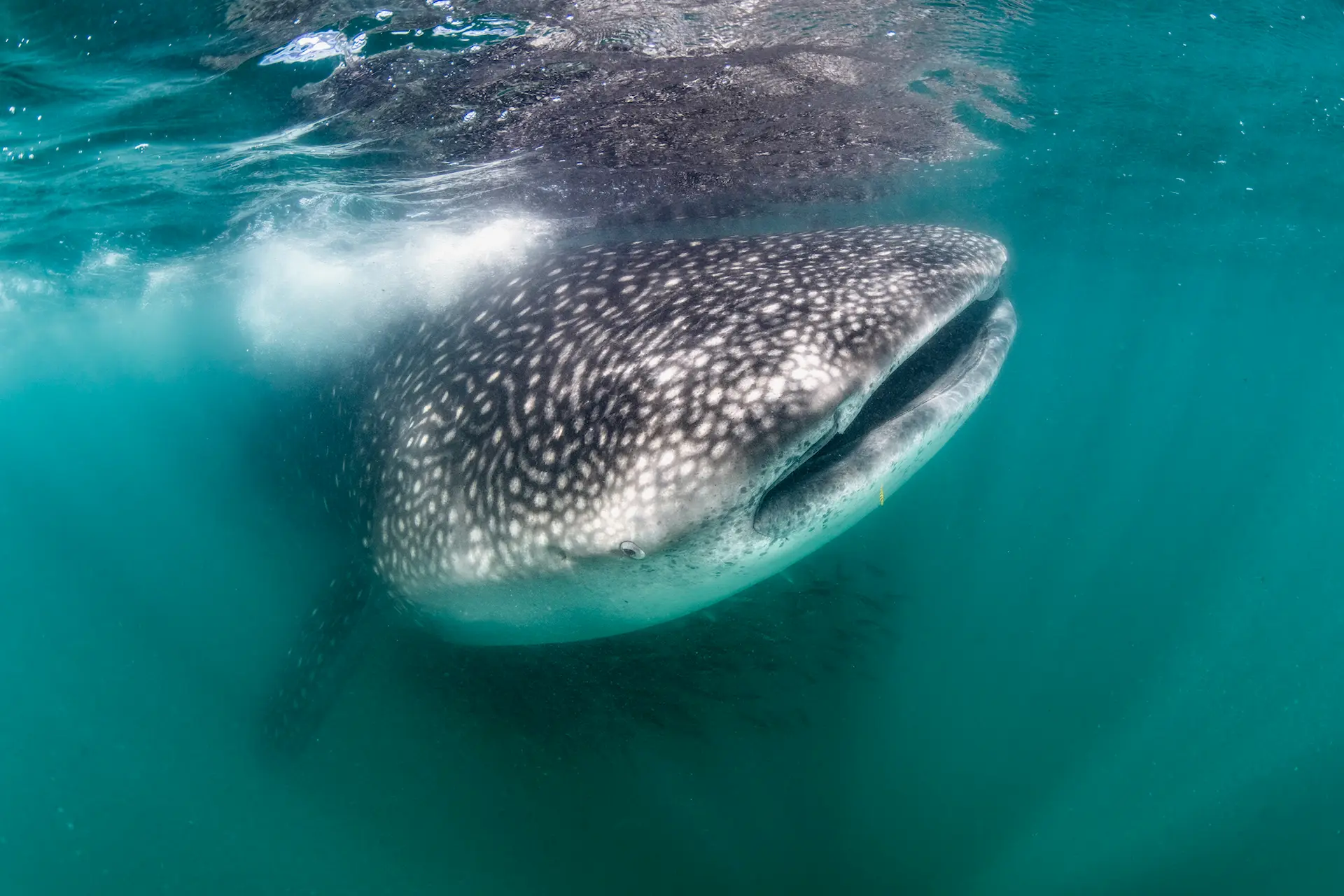
Slipping into the water beside a creature the size of a school bus is a profoundly humbling experience. As the massive, polka-dotted shadow approaches, your heart races—until you realize that the largest fish in the ocean is completely indifferent to your presence. It just wants to eat plankton.
The Whale Shark (Rhincodon typus) is a marvel of the marine world, and the Bay of La Paz in Baja California Sur is one of the few places on the planet where these “Gentle Giants” predictably congregate just minutes from the shoreline.
However, because this is a highly protected species, the Mexican government tightly regulates the activity. Knowing the exact whale shark season dates in La Paz, understanding the ethical rules, and knowing what to expect is critical. In this comprehensive 2026 guide, we cover everything you need to plan your ultimate pelagic encounter.
The Science of the Giants: Why Do They Come to La Paz?
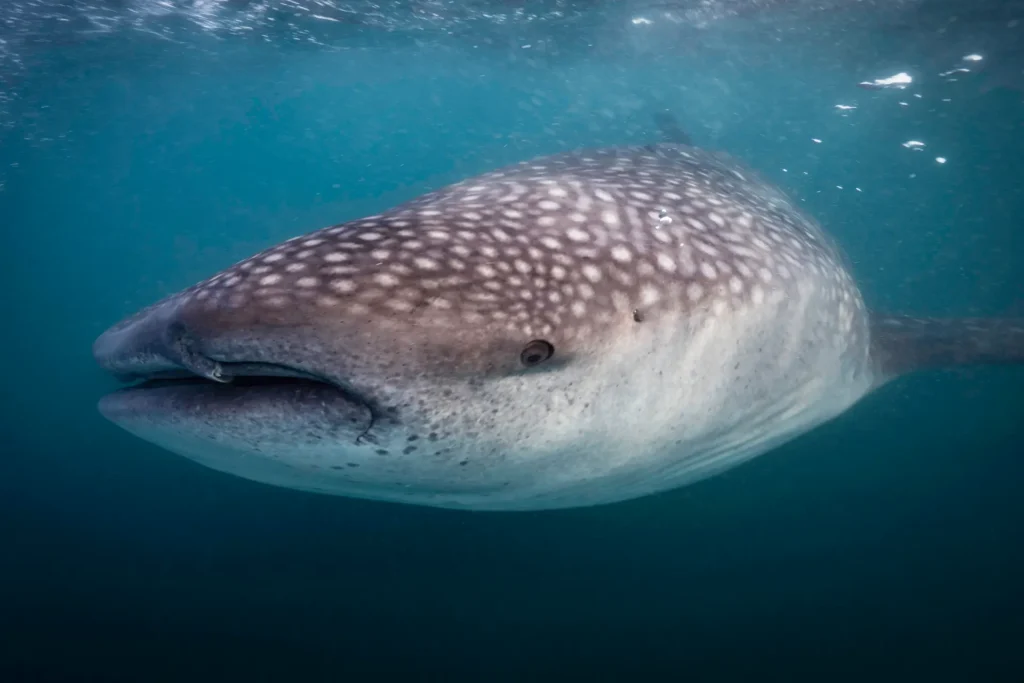
Despite their intimidating name, whale sharks are not whales; they are sharks. However, they pose zero threat to humans. According to the World Wildlife Fund (WWF), they are docile filter-feeders, cruising through the ocean with their massive mouths wide open, scooping up microscopic plankton, krill, and small fish.
So, why do they gather in La Paz? Just off the coast of the city lies a long sandbar called El Mogote. The shallow, warm waters surrounding this peninsula create a nutrient-rich “soup” of plankton. This acts as an all-you-can-eat buffet for juvenile whale sharks (that still measure an impressive 15 to 30 feet long), making it the perfect nursery and feeding ground.
Field Data: Sizing and The “Shark Soup” Phenomenon
Based on recent fleet telemetry and biological logs from Mexico Travel Adventure captains, the specimens aggregating at El Mogote are primarily large juveniles, averaging between 13 to 23 feet (4 to 7 meters) in length.
During peak season, when the plankton blooms are most intense, a unique phenomenon occurs. It is not uncommon to witness 3 or 4 whale sharks feeding simultaneously in the exact same plankton patch. Among local captains and guides, this extraordinary, localized aggregation is affectionately referred to as “Shark Soup.”
Exactly When is the Whale Shark Season in La Paz? (2026 Dates)
Unlike zoos or aquariums, the ocean is wild and unpredictable. The sharks arrive when the food arrives. However, the Secretariat of Environment and Natural Resources (SEMARNAT) determines the official opening and closing of the bay based on daily biological censuses.
The Official 2026 Window
The season legally opens between October and May.
However, if you want to guarantee the best experience, you must understand the micro-seasons:
Early Season (October – November)
The bay officially opens, but shark numbers are still growing. The water is beautifully warm (around 82°F / 28°C), making it a very comfortable time to swim.
Peak Season (December – March)
This is generally considered the best time to see whale sharks in Mexico. The bay holds the highest concentration of sharks, maximizing your chances of multiple encounters. The water temperature drops to around 68°F (20°C), so a wetsuit is required.
Dive & Snorkel Conditions at El Mogote
Because whale sharks come to La Paz specifically to feed on dense plankton, the water is not crystal clear. This nutrient-rich environment means visibility fluctuates, which actually makes the sudden appearance of a school-bus-sized shark even more thrilling.
| Water Condition | Estimated Visibility |
| Very Low (High Plankton) | 2–4 m (7–13 ft) |
| Average (Most Days) | 4–8 m (13–26 ft) |
| Good | 8–12 m (26–39 ft) |
| Exceptional | 12–15 m (39–49 ft) |
While the bay’s depth ranges from 20 to 60 feet (6 to 20 meters), all whale shark encounters happen in the first 3 to 10 feet of the water column where they feed. Freediving (apnea) is strictly prohibited.
Late Season (April – May)
The sharks begin their migration out of the bay. Sightings are still frequent, but the government may close the season early if the shark population drops below a sustainable threshold.
La Paz vs. Other Destinations (Why Baja is Better)
If you are researching where to swim with whale sharks in Mexico, you have likely seen tours offered in Cancun, Isla Mujeres, or even Oslob in the Philippines. Why choose La Paz?
- Proximity: In places like Cancun, you often endure a grueling 2-hour boat ride into rough open ocean to find the sharks. In La Paz, the feeding zone is a smooth, 15-minute boat ride from the downtown marina.
- Calm Waters: Because the Bay of La Paz is protected by the El Mogote sandbar, the water is generally flat and calm, making it ideal for families and those prone to seasickness.
- Ethical Practices: Unlike some Asian destinations where operators illegally feed the sharks to keep them around, La Paz enforces a strictly 100% natural observation model.
Strict Ethical Rules and The “Traffic Light” System
La Paz is a global role model for sustainable marine tourism. The bay is divided into zones, and a “Traffic Light” system is used to prevent the sharks from being overwhelmed by tourists.
- GPS Monitoring: Only a limited number of licensed boats can enter the observation zone. Every boat is tracked by GPS. If the zone is “Red,” boats must wait outside until another boat leaves.
- The 5-Swimmer Rule: Only 5 tourists and 1 certified guide are allowed in the water with a single shark at any given time. This ensures the animal never feels surrounded or trapped.
- Distance: Swimmers must maintain a strict distance of 3 meters (10 feet) from the shark’s head and body, and 4 meters (13 feet) from its powerful tail.
- No Touching: Touching the shark removes its protective mucus layer, exposing it to infections. Doing so will result in an immediate termination of your tour.
The Experience: What to Expect on Your Tour
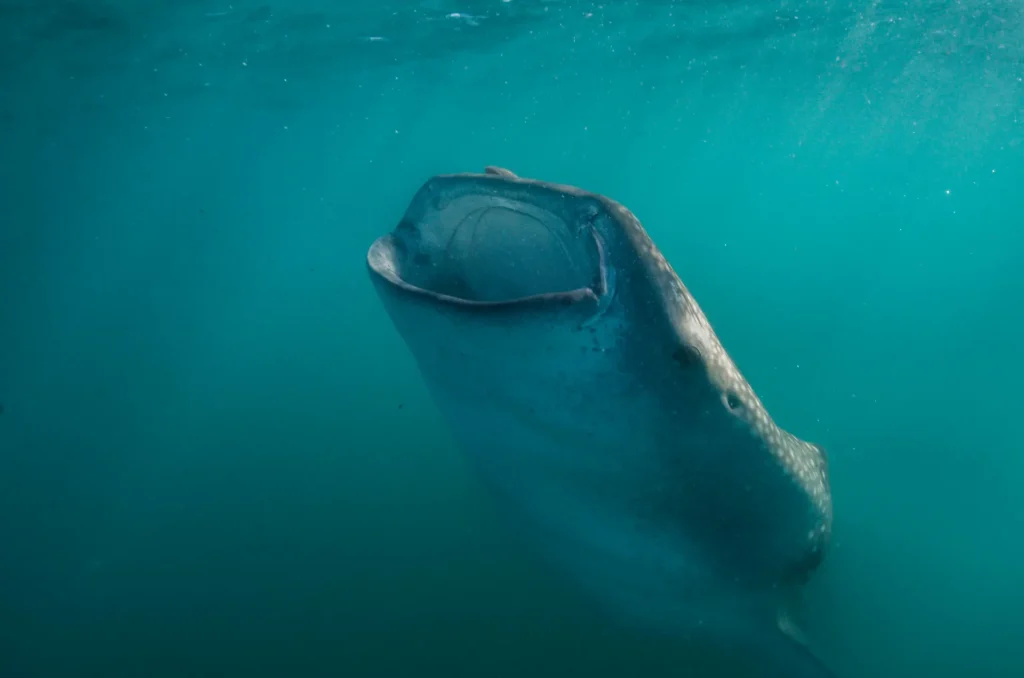
A standard La Paz whale shark tour lasts between 2 to 3 hours.
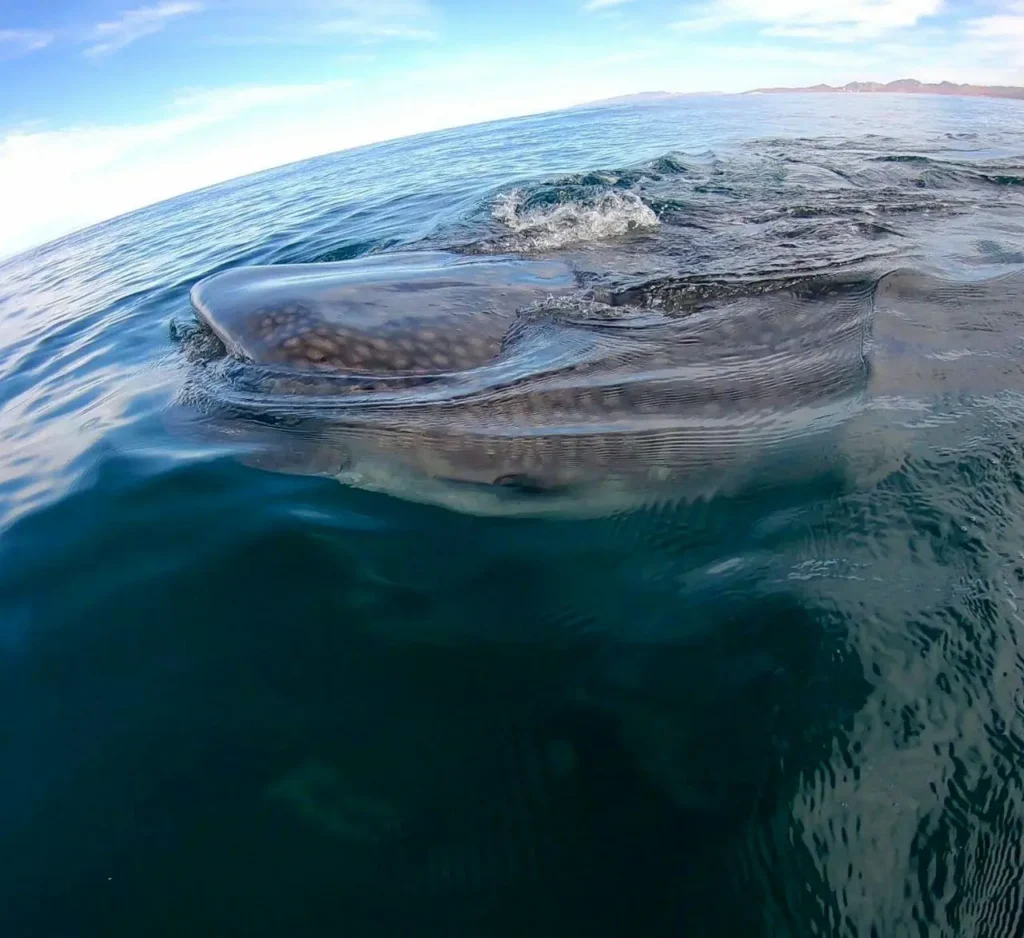
You will board a comfortable panga (a motorized skiff) with your captain and marine biologist guide. Once in the observation zone, the captain will look for the massive dorsal fins slicing slowly through the surface.
When a shark is spotted, the captain positions the boat safely ahead of its path. On the guide’s signal, you will slide quietly into the water (no splashing!). Because the sharks are feeding near the surface, scuba diving is strictly prohibited—the bubbles scare them away. This is a snorkeling-only activity.
You will need to swim relatively fast to keep up with their cruising speed, but floating alongside them as they effortlessly glide through the water is pure magic.
Real-Time Dynamics: How Long Do You Actually Swim?
Federal regulations allow a maximum of 14 authorized boats inside the observation polygon per shift (Shifts run for 2 to 3 hours).
But how much time do you actually spend swimming beside the shark?
- The “Jump” Dynamics: If a shark is swimming fast, your in-water encounter might last a thrilling 2 to 5 minutes before it outpaces you. If the shark is static and feeding vertically, CONANP allows a maximum of 30 minutes of interaction per shark, which is divided among the boats waiting.
- Number of Jumps: On an average trip with favorable weather, each group of 5 swimmers will jump into the water 3 separate times.
Mandatory Gear Requirements: The government mandates the use of either a life jacket or a wetsuit at all times. Because the water drops to 68°F (20°C) in winter, Mexico Travel Adventure provides both 5mm full wetsuits and 3mm shorties.
We highly recommend wearing the wetsuit; it provides better agility in the water than a life jacket and protects against seasonal jellyfish blooms naturally attracted by the plankton.
Logistics & Preparation (How to Plan Your Trip)
Getting There
If you are flying into Los Cabos International Airport (SJD), La Paz is a 2-hour drive north on a safe, modern highway. If you fly directly into La Paz (LAP), the marina is just 15 minutes from the airport.
What to Pack
Reef-Safe Sunscreen: Standard sunscreens contain chemicals that kill plankton and harm the sharks. Use only biodegradable, reef-safe brands, or better yet, wear a long-sleeved UV rash guard.
Action Camera: A GoPro is highly recommended, but flash photography is strictly forbidden as it damages the sharks’ sensitive eyes.
A Windbreaker: Even in warm months, the boat ride back to the marina can be chilly when you are wet.
Frequently Asked Questions (FAQ)
Are whale sharks dangerous? Not at all. Their throats are about the size of a quarter, making it physically impossible for them to swallow anything larger than a small fish. They are docile and completely uninterested in humans.
Can children do this tour? Yes, this is an excellent family activity. However, children should be comfortable swimming in open water and capable of snorkeling. For very young children, watching these giants from the safety of the boat is still an incredible experience.
Can I combine this with an Espiritu Santo tour? Absolutely! Because the whale shark tour only takes half a day, many of our guests choose to spend their next day exploring the nearby Espiritu Santo Island to snorkel with wild sea lions.
Book Your Ethical Encounter with Mexico Travel Adventure
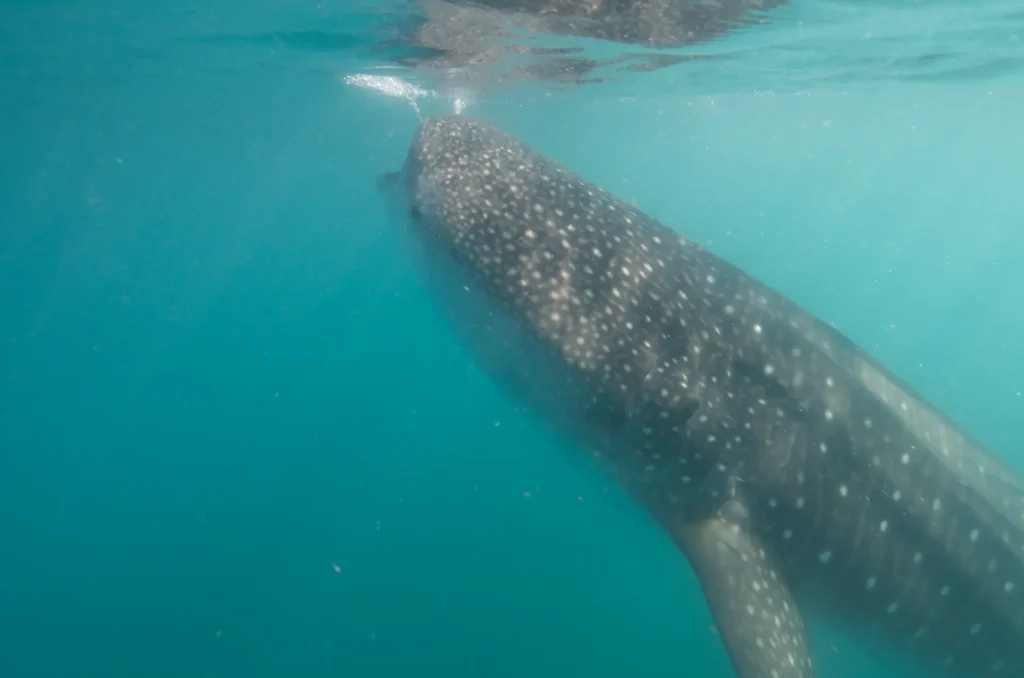
When booking this once-in-a-lifetime experience, the operator you choose matters. Many street vendors sell unauthorized tours without proper permits, leading to boats being turned away by the authorities at the observation zone.
At Mexico Travel Adventure, we hold official, guaranteed SEMARNAT permits. Our tours are exclusively led by passionate marine biologists who will teach you about the ecology of the Bay of La Paz. We provide premium snorkeling gear, clean wetsuits, and a commitment to the absolute safety and respect of the animals.
👉 Ready for a once-in-a-lifetime encounter? Secure your official Whale Shark Tour here before the season books out.