Often referred to as the “Galapagos of Mexico,” the Revillagigedo Archipelago is a remote volcanic island chain located roughly 250 miles (400 kilometers) off the southern tip of the Baja California Peninsula.
For advanced scuba divers, Socorro Island diving represents the pinnacle of pelagic encounters. Unlike tropical reef diving, this destination is not about colorful corals or macro photography. Instead, it is a wild, unpredictable theater of the ocean’s largest apex predators and megafauna.
Designated as a UNESCO World Heritage site, the archipelago is the largest fully protected marine reserve in North America. If you are planning a trip to this remote frontier, this guide covers everything you need to know about Revillagigedo diving, the seasonal wildlife shifts, and what to expect on your liveaboard journey.
🗺️ Explore OUR Ultimate Baja & Sea of Cortez Dive Map
Wondering exactly where the Revillagigedo Archipelago is located relative to Cabo San Lucas, or curious about other world-class pelagic hubs in Baja California Sur?
Before diving into the details of Socorro, we highly recommend exploring our Interactive Sea of Cortez Dive Map.
Use this tool to visualize oceanic distances, locate marine reserves, and discover other iconic dive sites like Cabo Pulmo and La Ventana across the “Aquarium of the World.”
Marine Life: What Will You See?
The defining characteristic of Socorro diving is the sheer size of the marine life and their extraordinary willingness to interact with divers. The islands act as a magnetic oasis in the middle of the Pacific Ocean, drawing in migratory species.
Giant Pacific Mantas
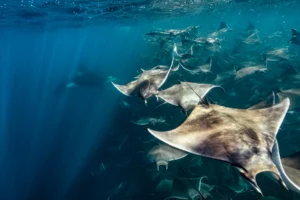
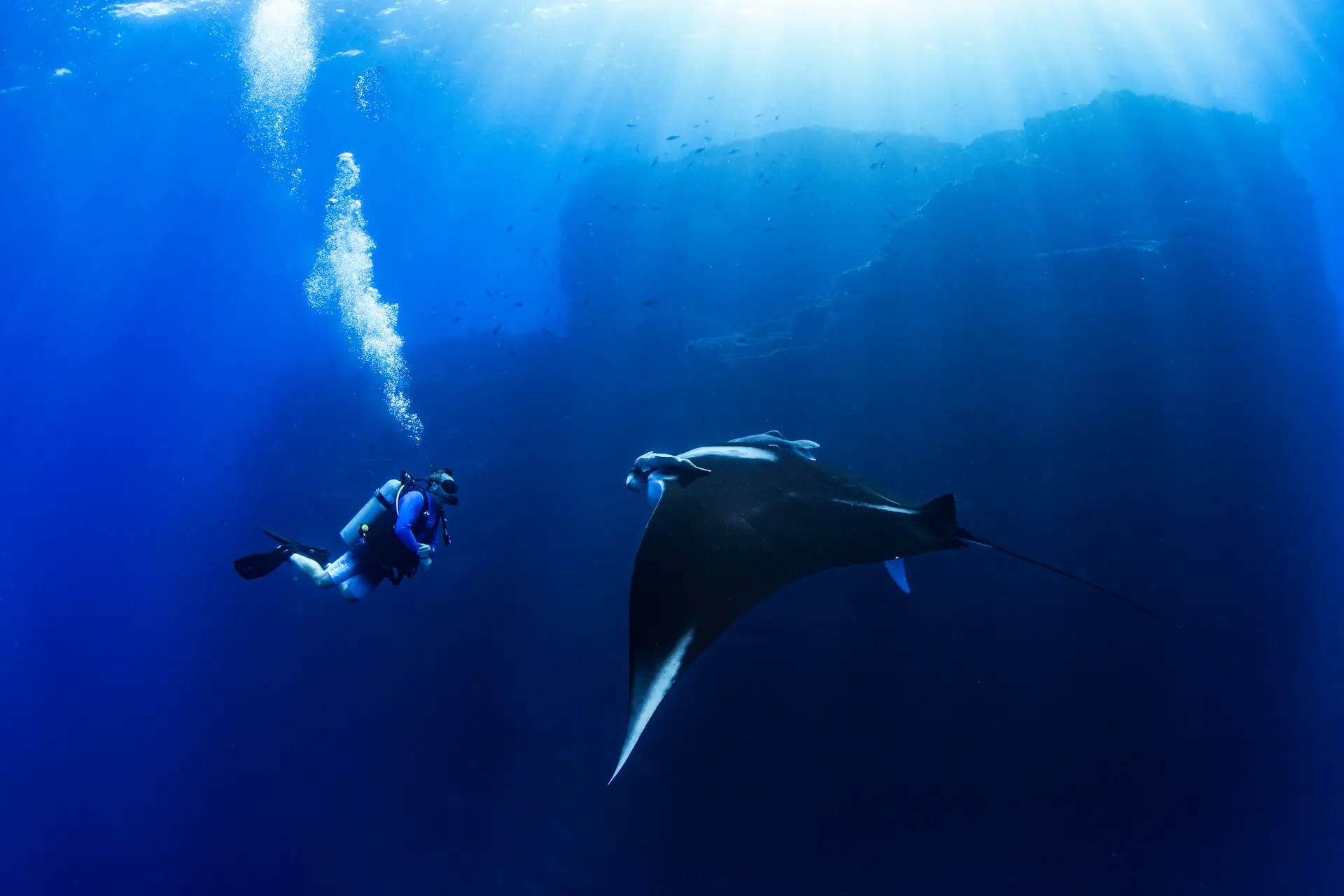
The true stars of the archipelago are the mantas. The Giant Oceanic Manta Ray (Mobula birostris) can reach wingspans of up to 23 feet (7 meters). What makes Socorro unique is the “friendly” behavior of these creatures.
They actively seek out the bubbles exhaled by divers, hovering just inches above your head in a display of mutual curiosity that you will not find anywhere else on Earth.
The Shark Population
If you love sharks, Revillagigedo is your sanctuary. It is common to see up to seven different species on a single trip, including schooling scalloped hammerheads, Galapagos sharks, silky sharks, whitetip reef sharks, and the occasional tiger or oceanic whitetip shark.
Bottlenose Dolphins
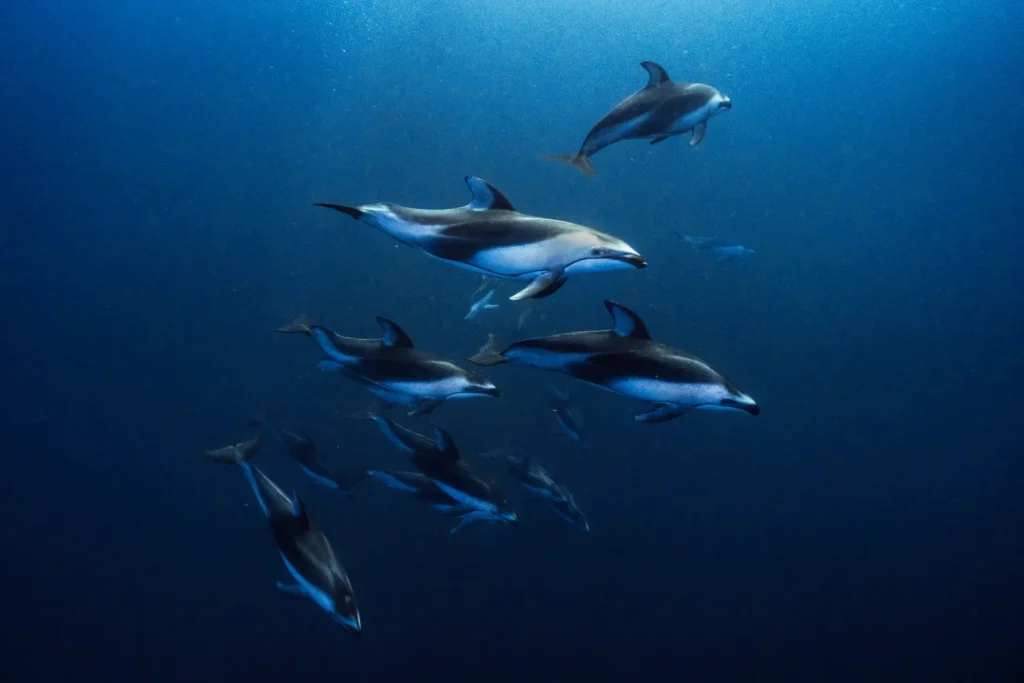
The resident bottlenose dolphins of Socorro are known for their high intelligence and playful nature. They frequently approach dive groups, mimicking movements and expecting interaction, making for an unforgettable underwater connection.
Iconic Dive Sites: Mapping the Archipelago
Every liveaboard itinerary is dictated by weather and ocean swells, but captains always aim for the “Big Three” dive sites that make this archipelago world-famous:
- El Boiler (San Benedicto): Named for its resemblance to a submerged gas tank, this is the ultimate manta ray cleaning station. It is also famous for its resident bottlenose dolphins. Safety Warning: These dolphins are the most interactive in the wild. They may try to playfully lure you into the deep blue; divers must monitor their gauges strictly to avoid being drawn below 145 feet (45 meters) by their “siren song.”
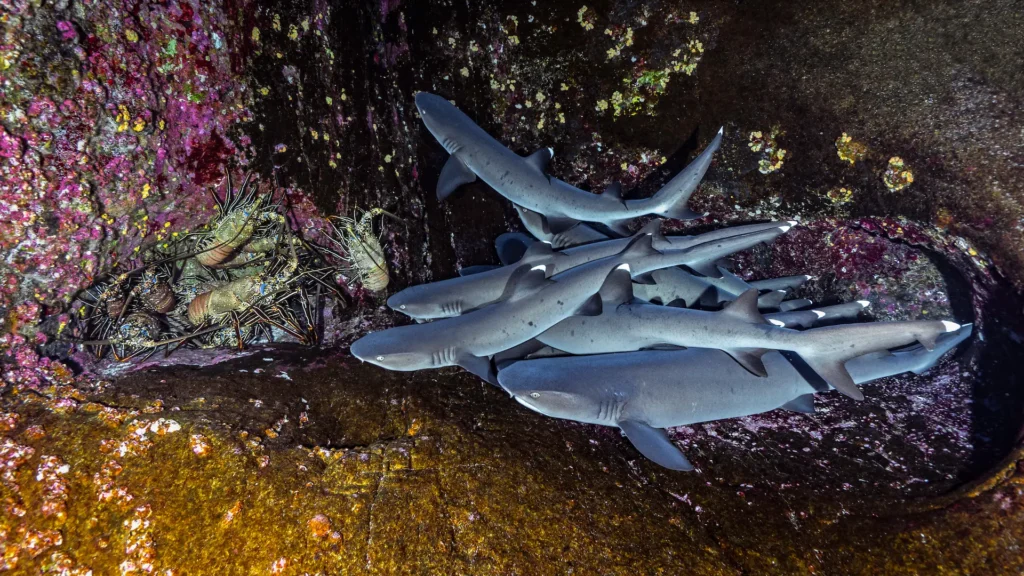
- Roca Partida: A dramatic oceanic pinnacle rising from the abyss. The crevices of this rock are densely packed with resting whitetip reef sharks sharing space with giant lobsters. The surrounding currents attract massive schools of Galapagos and silky sharks.
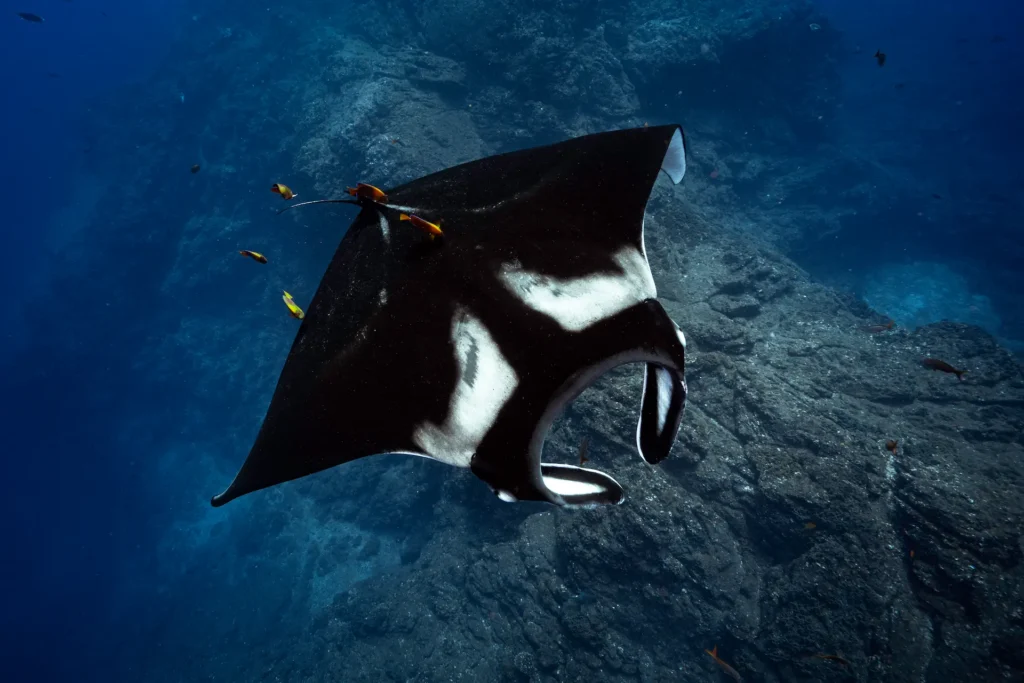
- Cabo Pearce (Socorro Island): A dynamic cleaning station where bright orange Clarion angelfish groom giant mantas. If you venture out into the blue, you can often spot large schools of hammerhead sharks. During winter, this site is famous for the resonant, underwater acoustic songs of passing humpback whales.
Best Time of Year to Dive Socorro Islands
Because the archipelago is exposed to the open Pacific, the diving season is strictly limited to the months when ocean conditions are safe enough for the 24-hour crossing from Cabo San Lucas. The official Socorro liveaboard diving season runs from November to May.
However, deciding the absolute best time of year to dive Socorro Islands depends entirely on which marine life you want to prioritize:
- November to December (Whale Sharks & Warm Water): The water is at its warmest (77°F – 82°F / 25°C – 28°C). This is the optimal time to spot passing whale sharks, alongside the resident giant mantas and dolphins.
- January to Mid-April (Humpback Whales): As the water temperature drops (70°F – 74°F / 21°C – 23°C), thousands of humpback whales arrive to breed and calve. While swimming with them is not guaranteed, hearing their complex songs vibrating through the water while you dive is a daily occurrence, and underwater sightings are frequently reported.
- Late April to May (Bait Balls & Shark Action): The water begins to warm up again. This transitional period brings massive bait balls, which in turn attract frenzied hunting behavior from silky sharks, tuna, and other pelagic predators.
Oceanography & Thermoclines: Wetsuit Recommendations
While surface temperatures dictate the season, advanced divers must prepare for the archipelago’s sudden thermal shifts underwater.
Regardless of the month, freezing thermoclines frequently hit between 50 and 130 feet (15 to 40 meters) of depth.
When you cross these layers, the water temperature can suddenly drop by 5°F to 9°F (3°C to 5°C) in a matter of seconds.
Because of these thermoclines and the fact that you will be doing repetitive dives over multiple days a 5mm full wetsuit is highly recommended year-round to retain your core body heat.
What to Expect: Logistics and Requirements
Traveling to Revillagigedo is a serious expedition. There are no day trips, no hotels, and no flights to the islands. The only way to experience this ecosystem is via a specialized liveaboard vessel.
The Crossing
Trips typically depart from San José del Cabo or Cabo San Lucas. The journey across the open ocean takes between 24 and 28 hours each way. Consequently, a standard expedition requires a minimum of 8 to 9 days to allow for 5 to 6 full days of diving.
Diving Conditions
This destination is strictly for advanced divers. You must hold an Advanced Open Water certification (or equivalent) and have at least 50 logged dives. You will experience strong, unpredictable currents, deep blue water descents without a visual bottom, and surging swells. Furthermore, all diving is conducted from inflatable skiffs (Zodiacs/Pangas), requiring negative buoyancy entries.
Operational Logistics, Safety Gear, and Park Fees
To execute a safe expedition in this remote frontier, liveaboard operations are highly standardized. Here are the exact logistical details you need to prepare for:
- True Ocean Crossing Times: While standard estimates mention a 24-hour crossing, real-world continuous navigation from Los Cabos actually takes 30 to 36 hours to reach San Benedicto Island, and 32 to 40 hours to reach Socorro Island, depending on ocean swells.
- Dive Frequency & Gases: Expect a rigorous operational rhythm of 3 to 4 dives per day. Because repetitive dive profiles average deep limits, diving with Nitrox is mandatory on these expeditions to maximize bottom time safely.
- Mandatory Safety Gear: Due to strong, unpredictable currents, every diver is strictly required to carry a large Surface Marker Buoy (SMB) and a personal GPS rescue beacon (such as a Nautilus Lifeline). If you do not own a personal GPS beacon, vessels have them available for rent.
- CONANP National Park Fees: The Mexican government heavily protects this reserve. The official park access fee is $3,760 MXN (approximately $192 USD) per person, per diving day. This tax is typically charged for 5 days of active diving.
Book Your Socorro Liveaboard with the Experts
Navigating the logistics of a high-end liveaboard expedition requires meticulous planning and local expertise. Not all vessels offer the same safety standards, and securing permits for the marine park is highly regulated by the Mexican government.
At Mexico Travel Adventure, we partner exclusively with the most prestigious and safest liveaboard fleets operating in the Revillagigedo Archipelago. Our team ensures your cabin selection, dive gear rentals, and pre-departure logistics in Cabo are flawless.
👉 Ready to dive the Galapagos of Mexico? Secure your cabin on our Socorro liveaboard diving expedition today and prepare for the ultimate pelagic adventure.